

Where to Get Divorce Papers: Free Forms and Trusted Sources
Start with your state court’s official website or the court clerk in the county where you plan to file. Here’s how to find the right divorce packet, avoid unnecessary charges, and distinguish new filing forms from copies of an existing case.
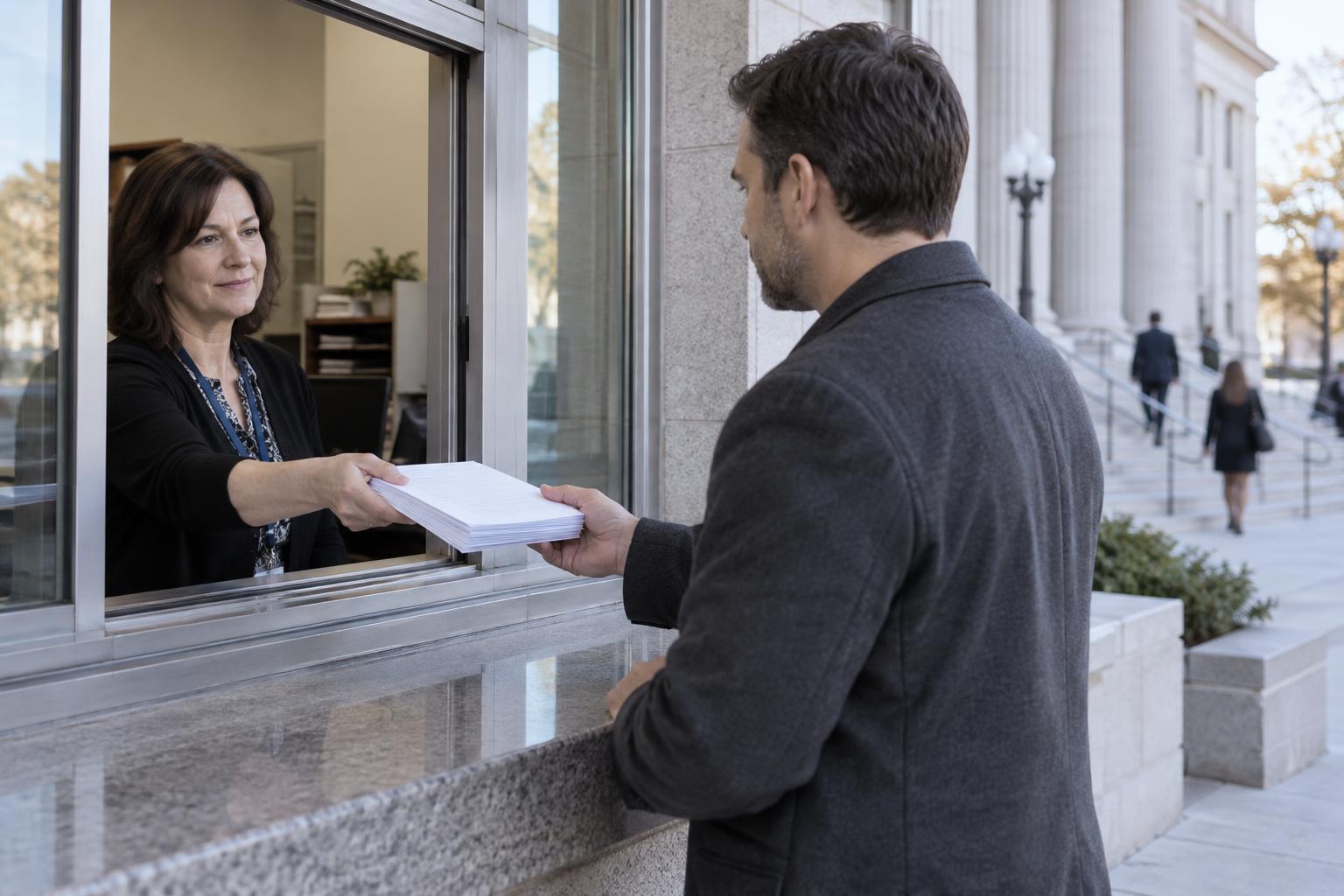
You can usually get divorce papers for free from your state court system’s official website, the appropriate county court’s website, or the court clerk’s office. Ask for the packet that matches your situation—starting a divorce, responding to one, or completing an agreed case—and check for required local forms. If you mean papers from a divorce already filed or completed, request those records from the court handling the case instead.
Where can you get official divorce forms?
The best starting point is the court system where you will file, not a generic downloadable template. Divorce forms and procedures vary by state, and individual courts may require additional documents.
You do not have to hire a lawyer simply to obtain blank forms. However, getting the correct packet does not establish that you qualify to file in that court.
Your state court system’s website
Search for your state’s name plus “official court divorce forms” or “judicial branch dissolution forms.” Courts sometimes use dissolution of marriage rather than divorce.
Look under headings such as:
- Self-help or self-represented litigants
- Family law
- Divorce or dissolution
- Forms and instructions
Verify that the page belongs to the court system. Many official websites use .gov, but some legitimate court sites use other domains. Follow links from a verified state government or court homepage rather than relying on a search advertisement.
USA.gov’s divorce page is another government starting point for locating divorce information.
The county court or clerk’s office
Check the website of the court that handles divorce in your county. Depending on the state, it may be called a family, circuit, district, or superior court.
If you cannot find the forms, contact the clerk and ask:
“Where can I get the current divorce packet, including any county-specific forms and filing instructions?”
Clerks can usually explain how to obtain forms and identify procedural resources. They generally cannot tell you what legal claims to make or what settlement terms to accept.
Court self-help centers and law libraries
Court self-help centers, family-law facilitators, and public law libraries may offer packets, guided questionnaires, workshops, or limited assistance checking forms. Services and eligibility vary. Some offer remote appointments, which can help if transportation or work schedules make an office visit difficult.
Which divorce packet should you request?
The right source is only half the task. You also need the right version of the paperwork.
First, confirm the state and county where you are allowed to file. Residency and venue rules matter; your current address alone may not settle the question. If spouses live in different states or children recently moved, ask a local divorce attorney or legal aid provider which court can handle the issues involved.
Then identify your role and circumstances:
- Starting a divorce: Look for a petitioner’s or plaintiff’s packet.
- Responding after being served: Look for an answer or response packet for a respondent or defendant.
- Filing together: Some courts offer a joint petition or special agreed-divorce process.
- Divorcing with minor children: Choose the applicable children’s packet, which may include parenting, child-support, and custody-jurisdiction forms.
- Using a simplified procedure: Read its eligibility requirements carefully. Agreement alone may not qualify you.
A “divorce without children” packet is not automatically appropriate simply because you agree on parenting. Read the court’s definition of which cases belong in each category.
What is usually in a starting packet?
Depending on the court, initial paperwork may include a petition or complaint, a summons, a case information sheet, and required notices. Other documents—such as financial disclosures, parenting proposals, settlement agreements, or proposed judgments—may be required later rather than at filing.
A blank decree is not a substitute for a petition. The petition starts the case; the decree or judgment generally records the court’s final decision.
Download the instructions along with the forms. They explain which documents apply, when to submit them, and whether additional local paperwork is necessary.
Are divorce papers free, and can you get paper copies?
Blank forms downloaded directly from an official court website are often free. That does not mean the divorce itself is free.
You may still face charges for:
- Filing the case or submitting certain responses
- Serving your spouse through an authorized method
- Printing or purchasing a paper packet
- Obtaining ordinary or certified copies of court records
- Using an electronic filing provider, where permitted
Ask the clerk for the current fee schedule rather than relying on an old article or a commercial website. Also ask whether any separate provider charges apply to online filing.
If you cannot afford court fees, request the court’s fee-waiver application, sometimes called an indigency application or application to proceed without paying fees. Approval standards and the expenses covered vary. A waiver does not necessarily cover private document-preparation services or every service-related expense.
If you lack a printer or internet access, ask the clerk whether packets are available in person or by mail. A public library or law library may help with printing, but it cannot necessarily advise you on completing the forms. Ask the court about disability accommodations, language assistance, and available translated instructions if needed.
Should you use an online divorce service or legal aid?
Official forms are usually the safest first stop. Other sources can be useful, but they provide different levels of help.
| Source | What it typically provides | Important limitation |
|---|---|---|
| Official court website | Blank forms, instructions, sometimes guided interviews | You must select and complete the appropriate documents |
| Clerk or court self-help center | Local packets and procedural guidance | Staff generally cannot act as your lawyer |
| Legal aid organization | Advice, clinics, or representation for eligible applicants | Eligibility, priorities, and capacity vary |
| Private document-preparation service | Forms populated using your answers | Legal advice and filing may not be included |
| Divorce attorney | Advice and tailored preparation or review | Fees apply unless services are free or subsidized |
A paid service is not necessarily selling different or better court forms. Often, you are paying for a questionnaire, document assembly, or administrative assistance.
Before paying, check whether the provider supports your exact state, county, and case type. Ask what happens if the court rejects the documents, whether updates cost extra, and whether filing, service, or attorney review is included. Avoid providers promising guaranteed court approval or a final divorce by a fixed date.
For free or lower-cost legal help, check your court’s referral resources or search LawHelp.org. Some attorneys also offer limited-scope services, such as reviewing a packet without handling the entire divorce.
Where do you get papers if your spouse already filed?
If your spouse has started a case, you usually need papers for that existing case—not a second petition downloaded as though nothing has been filed.
Use the court name and case number on the documents you received. Ask that court’s clerk or self-help center for:
- The appropriate answer or response forms
- Any required financial disclosure forms
- Instructions for filing and delivering your response
- Information about requesting additional relief, if needed
Check your response deadline immediately. Do not assume that looking for forms, negotiating with your spouse, or waiting for legal aid pauses it. Deadlines depend on local rules and the circumstances of service.
If your spouse says a case exists but you have no documents, contact the named court to ask how to locate the case and obtain accessible records. Access may require identification or an account. Do not assume informal notice replaces required service—or that missing papers make the case disappear.
Where do you get copies of completed divorce papers?
If you need proof of a completed divorce, determine which document the requesting organization requires before ordering it.
A divorce decree or judgment is the court’s final order. It may contain the terms addressing property, support, and parenting. Request it from the clerk of the court that granted the divorce, or through that court’s authorized records system.
A divorce certificate is a vital record available in some states. It generally confirms basic facts about the divorce rather than setting out the full settlement terms. Availability and the issuing agency vary by state.
For a records request, gather:
- Both spouses’ names used during the case
- The court and county
- The approximate divorce date
- The case number, if known
- Whether you need a certified copy
A regular photocopy and a certified copy are not interchangeable for every purpose. Ask the organization requesting proof what it accepts. Older files may require an archive search, and access to sealed or confidential documents may be restricted.
What should you do after downloading the forms?
Finding the paperwork is the beginning, not the filing itself. Use this checklist before submitting anything.
1. Verify that the packet is current and complete
Return to the official forms page rather than relying on a PDF saved years ago. Check posted revision dates, local supplements, and the court’s checklist. A packet shared by a friend may belong to a different county or procedure.
2. Follow the instructions for each document
Use legal names consistently and answer required questions accurately. Do not guess about property ownership, income, debts, or requested custody arrangements simply to fill every box.
Check signature requirements before signing. Some documents require notarization; others allow a declaration under penalty of perjury. Do not sign for your spouse.
3. Protect sensitive information
Follow the court’s rules for Social Security numbers, account numbers, children’s information, and confidential attachments. Do not upload unredacted financial records merely because an online portal allows attachments.
If revealing your address could create a safety risk, ask about confidential-address procedures before putting it into a filing. Ordinary forms may not explain every available protection.
4. Confirm how filing and service work
Downloading a packet or completing an online questionnaire does not file your case. Determine whether your court accepts or requires electronic filing, in-person filing, or filing by mail, and how you will receive confirmation of acceptance.
Filing also does not automatically complete service on your spouse. Follow the court’s service instructions, including who may deliver documents and what proof must be filed. Do not assume sending an email or handing over the packet yourself is sufficient.
5. Get advice before making consequential requests
Consider speaking with a local divorce attorney if there are disputed parenting issues, significant assets, a business, retirement benefits, safety concerns, or uncertainty about support. Even standard forms can involve decisions that affect important rights.
Divorcesify provides general information, not legal representation. Laws and procedures vary by state, and a brief legal review may help you avoid errors that are difficult to fix later.
Key takeaways
- Start with your official state court website and confirm county-specific requirements.
- Choose forms for your role, case type, and stage of the divorce.
- Blank forms are often free; filing, service, and certified copies may cost money.
- If your spouse already filed, obtain response forms and check your deadline promptly.
- Request an existing decree from the court that granted the divorce.
- Downloading forms is not filing, and filing is not the same as serving your spouse.
Frequently asked questions
Can I get divorce papers at the courthouse?
Often, yes. The clerk’s office or a court self-help center may provide printed divorce packets or direct you to official downloads. Call first to confirm the correct courthouse, hours, availability, and any printing charge. Ask specifically for your case type and any required county forms; court staff generally cannot provide legal advice.
Can I print divorce papers online and fill them out myself?
Usually, you can download official court forms and complete them yourself, following the accompanying instructions. Check whether your court requires typed entries, particular signatures, local supplements, or electronic filing. Printing and completing the forms does not start the divorce; you must submit them properly and meet applicable service requirements.
Do both spouses need to get separate divorce papers?
Not necessarily. One spouse typically files the initial petition, and the other receives the required documents through an authorized service process. The responding spouse may then need separate answer forms. Some courts offer joint filing procedures. Even when you agree, follow the court’s instructions rather than assuming both spouses should file separate petitions.
Are divorce papers from an office supply store valid?
A purchased template is not automatically invalid, but it may be outdated or fail to satisfy your court’s requirements. Compare it with the current official state and county forms before using it. Court-provided packets are usually a better starting point because they come with jurisdiction-specific instructions and may be available free.
Where can I get divorce papers if I do not know where my spouse lives?
Start with the official forms for the court where you qualify to file, but ask its self-help center about service when a spouse’s location is unknown. You may need documented search efforts and court permission for an alternative method. A standard divorce packet alone does not authorize you to skip service.
AI-assisted general information from Divorcesify. This article has not been represented as reviewed by a licensed attorney; confirm current local law before acting.
Find your state’s divorce rules · Explore divorce process guides · Prepare for your attorney consultation
Attorney advertising. Divorcesify is not a law firm, is not a lawyer referral service, and does not provide legal advice. Information on this site is general and may not reflect current law in your state. Using this site or submitting a form does not create an attorney-client relationship. Divorcesify matches visitors with independent, licensed attorneys who pay a fee to participate. We do not endorse or guarantee any attorney, and the choice of a lawyer is an important decision that should not be based solely on advertisements. Read full disclosures.
Get the Divorce Preparation Guide
Checklists, a post-divorce budget outline, and the questions to ask your first attorney — free.
Keep reading
Temporary Orders in Divorce: What They Do and How to Ask
Divorce can take time, but decisions about children, housing, and bills often cannot wait. Temporary orders can establish enforceable rules while your case moves forward.

Who Claims a Child on Taxes After Divorce?
The parent entitled to claim a child for federal tax purposes is not always the parent named in a divorce agreement. Learn how overnight stays, IRS Form 8332, and different tax benefits fit together.
How to File for Divorce in California: Step-by-Step
Filing for divorce in California starts with residency, court forms, and proper service—but those steps do not end the marriage. Follow this practical guide through disclosures, settlement options, and the final judgment.