How to File for Divorce in California: Step-by-Step
Filing for divorce in California starts with residency, court forms, and proper service—but those steps do not end the marriage. Follow this practical guide through disclosures, settlement options, and the final judgment.
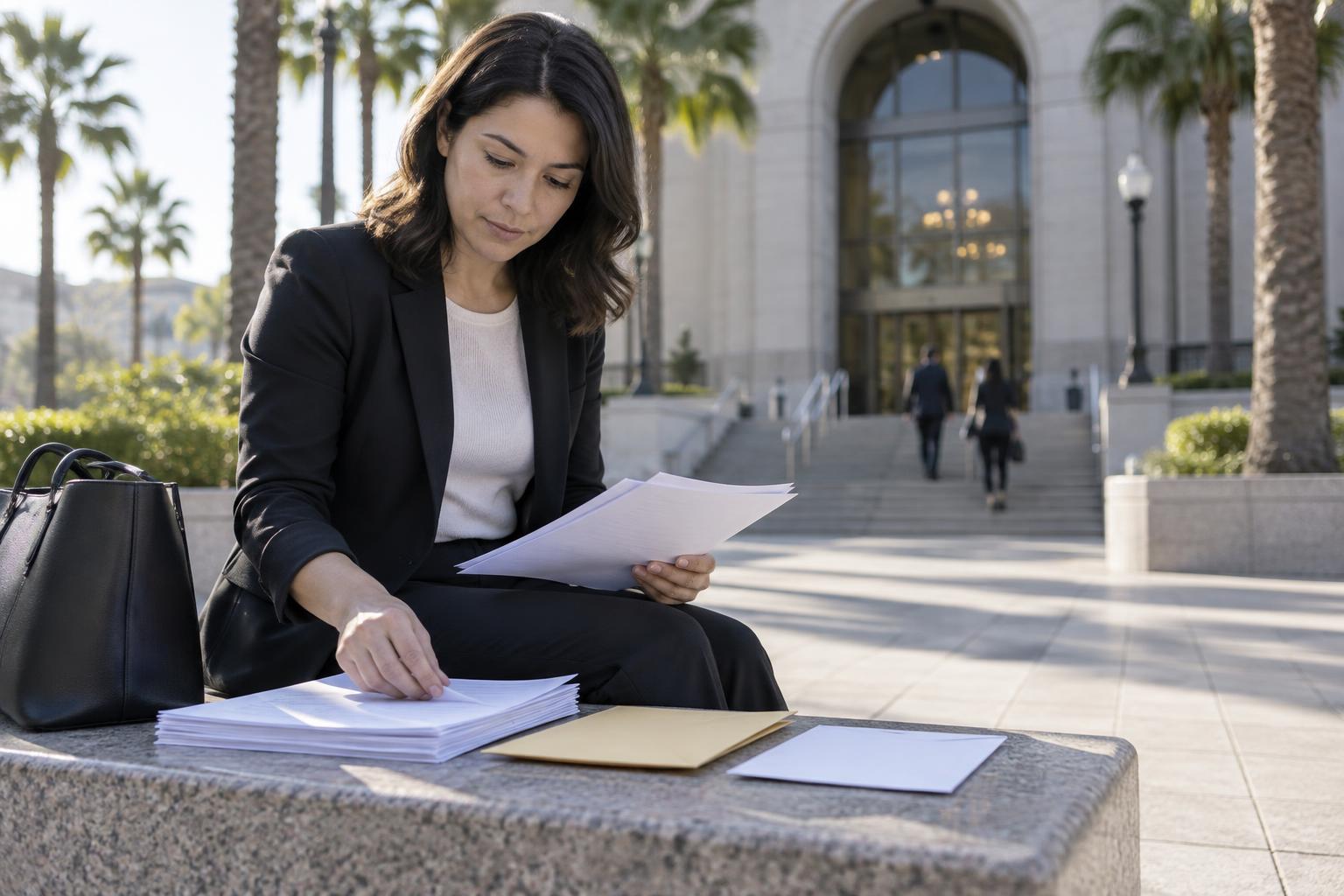
To file for divorce in California, you generally must meet the residency requirements, file a Petition and Summons with the appropriate Superior Court, and have your spouse legally served. You must then complete required financial disclosures and submit a settlement or obtain court decisions before a judge can finalize the divorce. California generally requires a minimum waiting period of six months and one day, measured from service on your spouse or their appearance in the case, whichever happens first—not simply from your filing date.
This guide explains the standard process when one spouse starts the case. Divorce laws vary by state, and California counties have different local procedures. Divorcesify provides general information, not legal advice; a local divorce attorney or court self-help center can help you apply these steps to your circumstances.
1. Do you qualify to file for divorce in California?
For a standard California divorce, either you or your spouse generally must have lived:
- In California for the previous six months; and
- In the county where you file for the previous three months.
The same spouse should satisfy both requirements. You normally file in that county’s Superior Court, using the courthouse or family-law filing location designated by the court.
If neither spouse qualifies yet, legal separation may be an option while you establish residency. A legal separation does not end the marriage, but you may be able to amend the case to request divorce later.
Special rules can apply to registered domestic partnerships and certain same-sex marriages. Ask a self-help center before assuming the ordinary residency requirements prevent you from filing.
Do you need to prove wrongdoing?
No. California is a no-fault divorce state. Most petitions cite irreconcilable differences, and your spouse does not have to agree to the divorce itself.
However, residency does not settle every jurisdiction question. If your spouse lives elsewhere or your children recently moved between states, the court’s authority over support, property, or custody may need separate analysis.
Start with the California Courts divorce guide, rather than a commercial filing website.
2. Which California divorce forms and fees do you need?
For the standard process, the main starting forms are:
| Form | Purpose | When it generally applies |
|---|---|---|
| Petition—Marriage/Domestic Partnership (FL-100) | Starts the case and identifies the orders you request | Standard divorce filings |
| Summons (FL-110) | Notifies your spouse and contains automatic restraining orders | Standard divorce filings |
| Declaration Under UCCJEA (FL-105) | Provides children’s residence and custody-case information | When you have minor children together |
| Request to Waive Court Fees (FW-001) | Requests relief from qualifying court fees | If you cannot afford the fees |
| Local forms | Supply information required by your particular court | Depends on the county |
Download current versions from the California Courts forms directory. Check your county court’s family-law page for local forms and filing instructions.
Complete the petition carefully
The petition asks about your marriage, separation date, children, property, debts, and requested orders, including spousal support. What you request can affect what the court may award, particularly if your spouse never responds.
Do not guess about whether an asset is separate property or whether you should give up support rights. The date of separation can also affect financial issues; it is not necessarily the day someone moved out.
Read the Summons before filing. Its standard restrictions address matters such as transferring property, changing certain insurance arrangements, and taking minor children out of California without the required consent or court order. They generally bind the petitioner upon filing and the respondent upon service.
What does filing cost?
Expect an initial court filing fee of several hundred dollars unless you receive a fee waiver. Confirm the current amount with your county court. Your spouse generally pays a separate first-appearance fee if they file a Response, unless that fee is waived.
Service, document preparation, and attorney fees are separate expenses. A court fee waiver does not make a privately hired lawyer free.
3. How do you file your paperwork with the court?
Once your forms are complete, follow these steps:
- Check the correct filing location. A county may have several courthouses, but only certain locations handle family-law filings.
- Review local filing rules. Depending on the court, you may file in person, by mail, or electronically. E-filing requirements and exemptions vary.
- Prepare copies. For paper filing, you generally need the originals and at least two copies: one for you and one for your spouse. Follow local instructions.
- Pay the filing fee or submit your fee-waiver request. Follow up if the court requests additional information.
- Keep the filed documents. Save the case number and file-stamped copies. Electronic filers should download the court-endorsed versions.
Filing opens the case; it does not notify your spouse by itself, resolve custody, or end the marriage.
If you need immediate orders about support, parenting arrangements, or use of property, you may need a separate Request for Order, commonly FL-300. Urgent safety concerns may require a different protective-order process. Tell court staff or an attorney if disclosing your address or serving papers could put you at risk.
4. How do you serve divorce papers in California?
You cannot serve the starting papers yourself. For ordinary personal service, an adult who is at least 18 and is not a party to the case delivers the papers to your spouse. This might be a professional process server, a qualified friend, or a sheriff where that service is available.
The packet generally includes:
- Filed copies of the Petition and Summons;
- Other required starting documents, including FL-105 when applicable;
- A blank Response—Marriage/Domestic Partnership (FL-120); and
- Any additional blank forms or documents required for your case.
The server completes Proof of Service of Summons (FL-115). Make sure it is accurate and filed with the court. This proof documents when and how service happened.
Can you mail or email the papers?
Simply mailing or emailing them usually does not complete valid initial service. California permits alternatives in appropriate circumstances, including service by mail with a signed Notice and Acknowledgment of Receipt. Different rules apply to out-of-state service, substituted service, and court-authorized publication or posting.
If your spouse is avoiding service, missing, incarcerated, or overseas, get procedural help. Do not select an alternative method without confirming its requirements.
Your spouse generally has 30 days after service to file a Response. Calculate the deadline using applicable court rules, and do not confuse it with the separate minimum waiting period for ending the marriage.
5. What financial disclosures must you exchange?
California generally requires spouses to exchange information about income, expenses, assets, and debts—even when they agree on the divorce. You should disclose potentially separate property as well as marital property.
For the standard process, common disclosure documents include:
- Declaration of Disclosure (FL-140);
- Schedule of Assets and Debts (FL-142) or an appropriate Property Declaration (FL-160);
- Income and Expense Declaration (FL-150);
- Required supporting records, including tax returns and information supporting asset, debt, and income disclosures.
The petitioner generally serves preliminary disclosures within 60 days after filing the Petition. A respondent who files a Response generally serves theirs within 60 days after filing it. Authorized extensions may apply.
What gets filed, and what stays private?
The financial disclosure packet is generally exchanged with your spouse rather than filed wholesale in the public court record. You ordinarily file Declaration Regarding Service of Declaration of Disclosure and Income and Expense Declaration (FL-141) to document compliance.
An Income and Expense Declaration or other financial evidence may separately need to be filed when you request support or another financial order. Follow the instructions for that proceeding and protect sensitive identifiers.
Do not assume you can skip disclosures because there is little property or you trust each other. Preliminary disclosures generally cannot be waived in a standard divorce. Final disclosures can sometimes be waived under specific requirements. Failure to disclose can lead to penalties or a later challenge to the judgment.
6. What happens if your spouse agrees, responds, or does nothing?
Your next steps depend on whether your spouse files a Response and whether you reach a complete agreement.
You reach an agreement
An agreement should address every relevant issue: property, debts, support, custody, and parenting time. Put it into a written settlement suitable for court submission.
A spouse can participate in negotiating an agreement without filing a Response, producing what courts often call a default with agreement. This is different from a case in which both spouses participate through filed pleadings. Follow the correct judgment checklist for your situation.
Your spouse responds and you disagree
You may exchange additional records, negotiate, use mediation, and request court orders. Unresolved issues can eventually require a hearing or trial. A contested case does not necessarily mean every issue will go to trial.
For disputed custody or parenting time, court-connected mediation or child custody recommending counseling generally occurs before a judge decides those issues. Local practices differ.
Your spouse does not respond
After the response deadline passes, you may be able to request entry of default using FL-165. Default is not an automatic divorce: you must still submit the required judgment documents and satisfy applicable disclosure requirements.
In a true default without an agreement, the relief available is generally limited by what you requested in the Petition. Obtain advice before seeking default if your petition omitted important requests.
Is there a simpler process?
California offers summary dissolution for couples who satisfy all eligibility requirements. It uses different forms and procedures. Check the current official guidance rather than assuming that any short marriage qualifies. Ask the self-help center about other available joint-filing procedures as well.
7. How do you finalize a California divorce?
The court does not automatically finalize your divorce when the waiting period expires. You must submit an acceptable judgment packet or complete the proceedings needed for the judge to decide outstanding issues.
Common final documents include Judgment (FL-180) and Notice of Entry of Judgment (FL-190). Depending on the case, you may also need a declaration for an uncontested or default judgment, a settlement agreement, disclosure-compliance forms, and attachments addressing property, support, or children.
Use the California Courts checklist for your exact case type and your county’s local instructions. Missing signatures, inconsistent names or dates, and incomplete attachments can cause the court to return the packet for correction.
When are you legally divorced?
The minimum waiting period is generally six months and one day from service or the respondent’s appearance, whichever occurs first. Settlement does not ordinarily eliminate that waiting period, and disputed cases often take longer.
A judge may approve paperwork before the date marital status can end. Check the effective termination date in the entered judgment before remarrying. Neither filing nor reaching an agreement makes you single.
After entry, keep certified copies when needed and complete any follow-through the judgment requires, such as title transfers or separate retirement-account orders. The judgment may establish obligations without automatically completing those transactions.
Key takeaways
- Confirm that you or your spouse meets California’s residency requirements and file in the proper county.
- Start with the current court forms, check local requirements, and request a fee waiver if eligible.
- Arrange valid service and file proof; you cannot serve the starting papers yourself.
- Track the response deadline, disclosure deadlines, and minimum divorce waiting period separately.
- An agreement, a default, and a contested case require different paths to judgment.
- You remain married until the judgment’s effective termination date. Use a court self-help center or local divorce attorney when the next step is unclear.
Frequently asked questions
Can I file for divorce in California without a lawyer?
Yes. California allows you to represent yourself, and court self-help centers can explain forms and procedures. They do not act as your attorney. Consider legal advice if you have disputed custody, significant property, retirement benefits, safety concerns, or an agreement you do not fully understand.
Can I file for divorce online in California?
Some California Superior Courts allow or require electronic filing for certain family-law documents, with exceptions. Check your county court’s current rules and approved providers. Online filing only submits paperwork to the court; it does not replace valid service, financial disclosures, or the documents needed for a final judgment.
How long does a California divorce take if both spouses agree?
Even an agreed divorce generally cannot end the marriage before six months and one day from service on the respondent or their appearance, whichever occurs first. Preparing an agreement, completing disclosures, and obtaining court approval can take additional time. The effective termination date in your entered judgment controls.
Do both spouses have to agree to a California divorce?
No. One spouse can seek a California no-fault divorce without the other’s consent. However, the filing spouse must follow service and court procedures. If the other spouse does not respond, a default process may be available. If they dispute financial or parenting issues, those disagreements still need resolution.
Can California divorce filing fees be waived?
You can request a court fee waiver using FW-001 if you qualify based on public benefits, income, or inability to afford fees while meeting basic household needs. The court decides the request and may ask for more information. A waiver does not cover every expense, including privately retained attorney fees.
Attorney advertising. Divorcesify is not a law firm, is not a lawyer referral service, and does not provide legal advice. Information on this site is general and may not reflect current law in your state. Using this site or submitting a form does not create an attorney-client relationship. Divorcesify matches visitors with independent, licensed attorneys who pay a fee to participate. We do not endorse or guarantee any attorney, and the choice of a lawyer is an important decision that should not be based solely on advertisements. Read full disclosures.
Get the Divorce Preparation Guide
Checklists, a post-divorce budget outline, and the questions to ask your first attorney — free.
Keep reading
Temporary Orders in Divorce: What They Do and How to Ask
Divorce can take time, but decisions about children, housing, and bills often cannot wait. Temporary orders can establish enforceable rules while your case moves forward.
Who Claims a Child on Taxes After Divorce?
The parent entitled to claim a child for federal tax purposes is not always the parent named in a divorce agreement. Learn how overnight stays, IRS Form 8332, and different tax benefits fit together.
How to Find Hidden Assets in a Divorce
If your spouse’s financial disclosures do not match what you know, start with records—not accusations. Learn what to review, how formal discovery works, and which investigative shortcuts to avoid.