

Parenting Plan for Divorce: A Complete Practical Guide
A workable parenting plan turns custody decisions into clear instructions for everyday life. Learn what to include, how to avoid common gaps, and how to get your agreement approved.

A parenting plan for divorce is a written roadmap for where your children will live, when they will spend time with each parent, and how you will make decisions about their care. A useful plan covers ordinary school weeks as well as holidays, expenses, communication, and disagreements; it generally becomes enforceable as a custody order when approved and entered by a court. Requirements vary by state, so use your court’s forms and have a local divorce attorney review provisions that affect your rights or your child’s safety.
What should a parenting plan for divorce include?
Start with your child’s actual needs, not a generic calendar. Consider age, school, disability-related supports, relationships, each parent’s work hours, and the distance between homes. Fairness matters, but a workable arrangement is not necessarily an equal division of every day.
A complete plan usually addresses:
- Parenting time: Regular weeks, weekends, holidays, school breaks, and vacations.
- Decision-making: Responsibility for education, health care, and other major choices.
- Exchanges: Transportation, locations, timing, and delays.
- Information sharing: Access to school records, medical information, and emergency contacts.
- Communication: Parent-to-parent messages and children’s contact with the other parent.
- Expenses: Coordination with child support and responsibility for additional costs.
- Special circumstances: Travel, childcare, safety restrictions, and changing needs.
- Disagreements and revisions: What happens when the plan does not answer a question.
States use different terms, including legal custody, physical custody, parental responsibility, and parenting time. Match your court’s terminology rather than assuming a label means the same thing everywhere.
Avoid relying only on “reasonable visitation” or “as mutually agreed.” Flexibility works best when there is a specific default schedule if you cannot agree.
How do you build a workable parenting schedule?
Start with the ordinary school week
Write down where the child sleeps each night, who handles school transportation, and when each parent’s time begins and ends. Test the schedule against commutes, homework, extracurricular activities, and childcare availability.
For younger children, consider routines and the child’s established caregiving relationships. For older children, account for school commitments, friendships, and activities without making them responsible for choosing between parents.
Common arrangements have different practical demands:
| Schedule | Potential advantage | Issue to plan around |
|---|---|---|
| Alternating weeks | Fewer exchanges and a predictable weekly routine | Longer stretches away from each parent |
| 2-2-5-5 rotation | Consistent weekdays with each parent and alternating weekends | More transitions and a shared calendar requirement |
| Alternating weekends plus weekday time | Can fit a primary school-week home | Maintaining meaningful involvement beyond weekends |
| Longer school-break blocks | May work when parents live far apart | Travel costs, missed activities, and long separations |
No schedule is automatically best, and equal parenting time is not universally required. Focus on what supports the child’s welfare and complies with applicable law.
Make holidays and vacations override rules explicit
State which schedule takes priority. For example, designated holidays might override vacations, and approved vacations might override the regular weekly schedule.
Define holidays by start and end times, not just names. “Thanksgiving” could mean dinner, a full day, or the entire school break. Address birthdays, culturally important observances, teacher workdays, summer, and winter and spring breaks.
For vacations, specify:
- How much advance notice is required.
- How competing dates are resolved.
- What itinerary and contact details must be shared.
- Whether vacation time may interrupt a designated holiday.
Remove ambiguity from exchanges
A provision might say: “Parent B’s weekend begins at school dismissal Friday and ends at school drop-off Monday. When school is closed, exchanges occur at 9 a.m. at the designated location.” This is a drafting example, not a universal recommendation.
Also identify who provides transportation, authorized pickup adults, car-seat responsibilities, and how to communicate delays. Clarify whether missed time is made up and how replacement dates are chosen. Avoid automatic penalties that ignore illness, emergencies, or safety concerns.
How should you divide decisions and child-related expenses?
Separate major decisions from daily care
The parent caring for a child typically handles routine matters during that time, subject to the court order. Major decisions may require shared agreement or may be assigned to one parent or divided by subject, depending on state law and the order.
Address education, nonemergency medical and dental treatment, mental health care, religious upbringing where applicable, and significant extracurricular commitments. Specify who may consent, what consultation is required, and how supporting information is shared.
If decisions are shared, include a process for deadlocks. A requirement to “agree on everything” provides little direction when parents disagree. Do not assume that silence constitutes consent to major treatment or a school change.
For emergencies, explain how the other parent will be notified as soon as reasonably possible. The plan should not delay necessary emergency care while waiting for a response.
Coordinate expenses with the support order
A parenting plan does not replace a child support order. Make sure the documents agree about health insurance, childcare, and uninsured medical costs.
For expenses not already fully addressed, define:
- Which costs require advance written agreement.
- Each parent’s share or the applicable allocation method.
- What receipts or explanations are required.
- Deadlines for submitting and reimbursing expenses.
- How disputed charges will be handled.
Clarify extracurricular enrollment, equipment, tutoring, and transportation. One parent should not assume the other must pay for an optional activity simply because the child was enrolled.
Parenting time and child support are separate obligations. Generally, unpaid support does not justify withholding court-ordered contact, and missed visits do not justify stopping support.
What communication, childcare, and travel rules help?
Choose a reliable communication method, such as email or a parenting app, and set reasonable response expectations. Distinguish routine messages from urgent health or pickup issues. A system neither parent can consistently access will create new problems.
Keep children out of adult negotiations. Do not use them to carry payment requests, explain court disputes, or report on the other household.
For parent-child contact, specify reasonable opportunities for calls or video chats, accounting for bedtime, activities, and the child’s age. Avoid rigid requirements that turn a missed call into a conflict or require children to interrupt every activity.
Both parents should know how to access school and medical information when legally entitled to it. Address shared calendars, contact information, school notices, medications, and the transfer of essential belongings.
Decide whether childcare needs special rules
Some plans include a “right of first refusal”: before using another caregiver for a defined absence, a parent must offer that time to the other parent.
This is not automatically appropriate or required. If included, define the absence that triggers it, response deadlines, transportation, and exceptions for school, regular childcare, or family visits. An overly broad rule can create constant monitoring and disputes.
Distinguish travel from relocation
For overnight or international travel, address notice, destination information, passports, and any required consent. Court orders and destination-specific requirements may apply independently of your agreement.
Relocation is different from a vacation. A parenting plan cannot override state notice requirements or a requirement for court permission. Include a process for discussing proposed moves, but obtain legal advice before relocating a child.
How should a plan address safety or serious conflict?
A standard cooperative plan may be inappropriate when there is domestic abuse, coercive control, stalking, child abuse, or serious impairment from substance use. Describe specific behaviors and risks rather than relying on diagnostic labels.
Depending on the circumstances and court findings, safeguards may include:
- Supervised parenting time or professionally monitored exchanges.
- Exchanges at a safe location without direct parent-to-parent contact.
- A designated written communication channel.
- Restrictions tailored to substantiated safety risks.
- Protection of confidential addresses and contact details.
Any supervision provision should identify who may supervise, where visits happen, who pays, and how changes can be considered. Avoid vague conditions such as “visits resume when the parent is better.”
For persistent conflict without safety concerns requiring other protections, a more detailed arrangement with limited direct interaction may help. However, parallel parenting is not a substitute for assessing abuse or following protective orders.
Tell your attorney or mediator about safety concerns before joint sessions. Mediation may be unsuitable or may require safeguards and an applicable exemption. If there is immediate danger, contact emergency services; a domestic violence advocate can also help with safety planning.
How do you draft and get a parenting plan approved?
Use a structured drafting process
First, obtain your state or local court’s current parenting-plan form and instructions. Some courts require specific attachments, classes, or procedures. Court self-help centers can explain forms, though they generally cannot give legal advice.
Next, draft the plan in this order:
- List the child’s routines, needs, and existing commitments.
- Build the regular schedule and exchange rules.
- Add holidays, breaks, and vacation priorities.
- Assign decision-making responsibilities and information sharing.
- Coordinate expenses with proposed support terms.
- Add communication, safety, and dispute-resolution provisions.
- Check every section against existing orders.
Then test the draft using realistic scenarios: a sick child on exchange day, a canceled flight, overlapping vacation requests, a school closure, or a parent working unexpectedly. If the answer depends on an assumption, clarify the wording.
Understand what signatures do—and do not do
Parents can negotiate directly, through lawyers, or through mediation when appropriate. If you cannot agree, the court decides disputed issues under the applicable custody standards, generally centered on the child’s best interests.
Signing or notarizing a private plan does not, by itself, turn it into a court order. Submit the proposed plan through the required court process. Judges may reject terms that conflict with law or do not protect the child’s interests.
Once approved and entered, keep an accessible copy of the order and relevant attachments. Share necessary pickup or contact provisions with schools and caregivers without distributing unnecessary private details.
Can you change a parenting plan after divorce?
Children’s needs change, and an effective plan anticipates that without treating the schedule as optional.
Specify how parents may request a temporary swap and confirm agreement in writing. A one-time accommodation generally should not be treated as a permanent rewrite of the order. Unless properly changed, the existing order remains the enforceable baseline.
For lasting changes, follow your state’s modification procedures. Agreement alone may not update the court order, and contested changes may require proof of changed circumstances or another legal threshold.
Build in a review point around predictable transitions, such as starting school. A review does not automatically change custody; it creates an opportunity to assess what needs updating.
For disputes, consider a sequence of written discussion, mediation when safe and appropriate, and court review if necessary. Do not let that sequence block emergency relief or conflict with protective orders.
This guide provides general information, not legal advice. Divorcesify is not a law firm. A local divorce attorney can help you evaluate enforceability, safety provisions, and state-specific requirements before signing or requesting changes.
Key takeaways
- Build the plan around your child’s needs and a realistic weekly routine.
- Define holiday priorities, exchange details, major decisions, and expense procedures.
- Include a clear default arrangement even when you expect to cooperate.
- Tailor safety provisions to actual risks; standard cooperation language is not always appropriate.
- Obtain court approval and follow the proper process for lasting changes.
Frequently asked questions
Is a parenting plan required for divorce?
When divorcing parents have minor children, courts generally need custody and parenting-time arrangements, but states differ on whether a separately titled parenting plan is required. Some courts use mandatory forms or incorporate the terms into other orders. Check your local court’s current instructions and any requirements that apply to your case.
Can we write a parenting plan without a lawyer?
You can often prepare a proposed plan yourselves using court forms and self-help resources. However, legal review is especially valuable when there are safety concerns, interstate issues, unusual work schedules, or disagreements about decision-making. A privately signed document generally must go through the required court process to become an enforceable custody order.
Does a parenting plan have to provide 50/50 custody?
No universal rule requires every parenting plan to divide time equally. State law, the child’s needs, safety, distance between homes, and other circumstances affect the appropriate arrangement. Some states have presumptions or policies favoring certain arrangements. Equal time also does not automatically mean that neither parent will owe child support.
What happens if parents cannot agree on a parenting plan?
Parents may negotiate through attorneys or use mediation when appropriate, and some courts require a dispute-resolution step unless an exception applies. If disagreements remain, a judge decides the contested issues under state custody law. Follow existing orders while the dispute is pending, and ask about temporary or emergency relief when necessary.
How detailed should a parenting plan be?
It should be detailed enough that both parents can determine what happens without renegotiating ordinary situations. Include precise schedules, holiday priorities, exchange arrangements, decision-making rules, and communication expectations. More conflict or logistical complexity may require greater specificity. Avoid unnecessary restrictions that are difficult to follow or do not serve the child’s needs.
Can parents temporarily change the parenting schedule by agreement?
Parents can often agree to occasional schedule swaps if the order allows flexibility, but they should confirm the details in writing and follow any restrictions. A temporary agreement does not necessarily modify the court order or replace its enforceable terms. For recurring or permanent changes, ask about obtaining a formally modified order.
AI-assisted general information from Divorcesify. This article has not been represented as reviewed by a licensed attorney; confirm current local law before acting.
Find your state’s divorce rules · Explore divorce process guides · Prepare for your attorney consultation
Attorney advertising. Divorcesify is not a law firm, is not a lawyer referral service, and does not provide legal advice. Information on this site is general and may not reflect current law in your state. Using this site or submitting a form does not create an attorney-client relationship. Divorcesify matches visitors with independent, licensed attorneys who pay a fee to participate. We do not endorse or guarantee any attorney, and the choice of a lawyer is an important decision that should not be based solely on advertisements. Read full disclosures.
Get the Divorce Preparation Guide
Checklists, a post-divorce budget outline, and the questions to ask your first attorney — free.
Keep reading
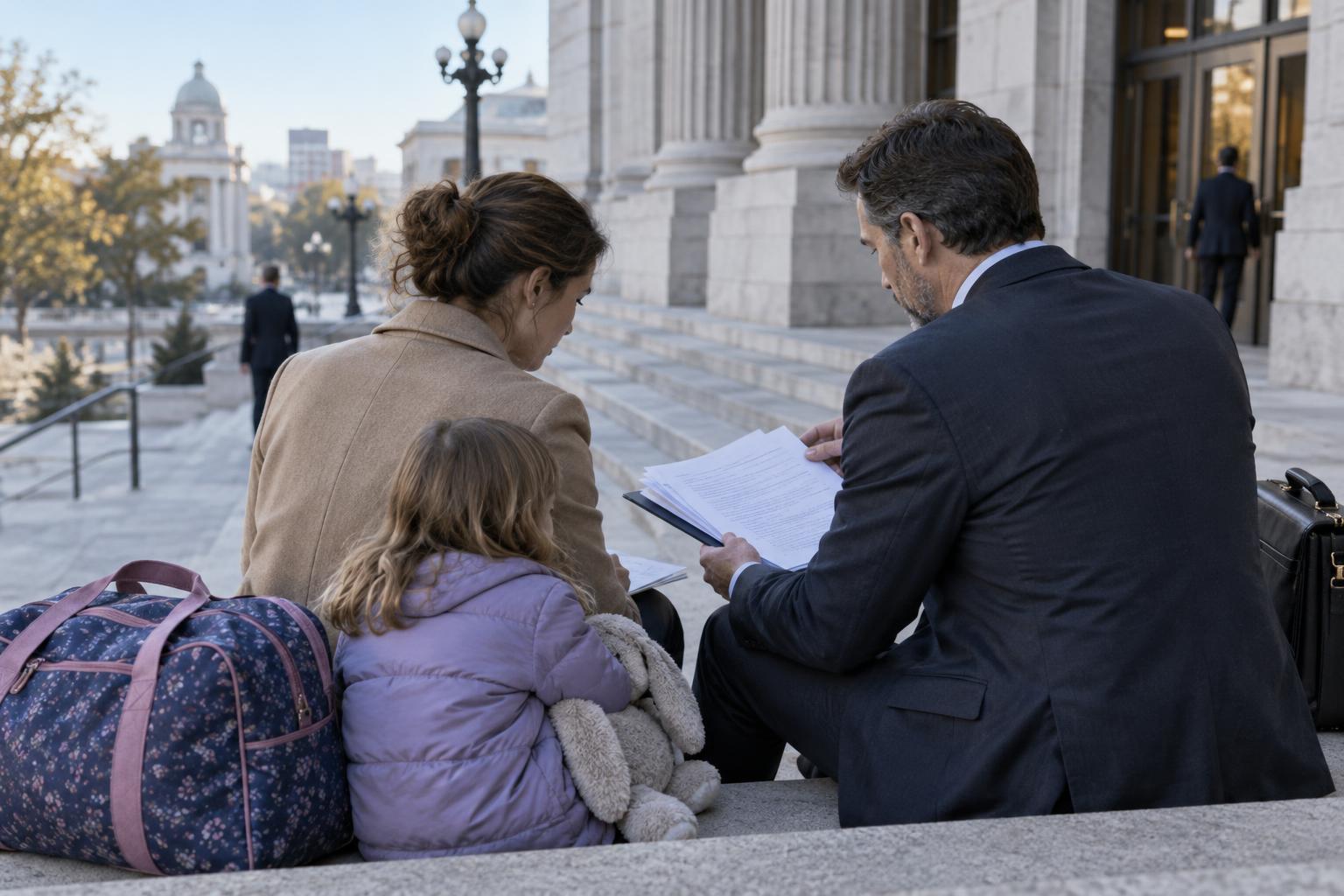
Temporary Orders in Divorce: What They Do and How to Ask
Divorce can take time, but decisions about children, housing, and bills often cannot wait. Temporary orders can establish enforceable rules while your case moves forward.

Who Claims a Child on Taxes After Divorce?
The parent entitled to claim a child for federal tax purposes is not always the parent named in a divorce agreement. Learn how overnight stays, IRS Form 8332, and different tax benefits fit together.

How to File for Divorce in California: Step-by-Step
Filing for divorce in California starts with residency, court forms, and proper service—but those steps do not end the marriage. Follow this practical guide through disclosures, settlement options, and the final judgment.