

Free Divorce Papers: Where to Find Forms and How to Use Them
You can usually get blank divorce forms free from your state or local court. Learn how to find the right packet, avoid misleading offers, and understand what you still need to do before a judge can finalize your divorce.
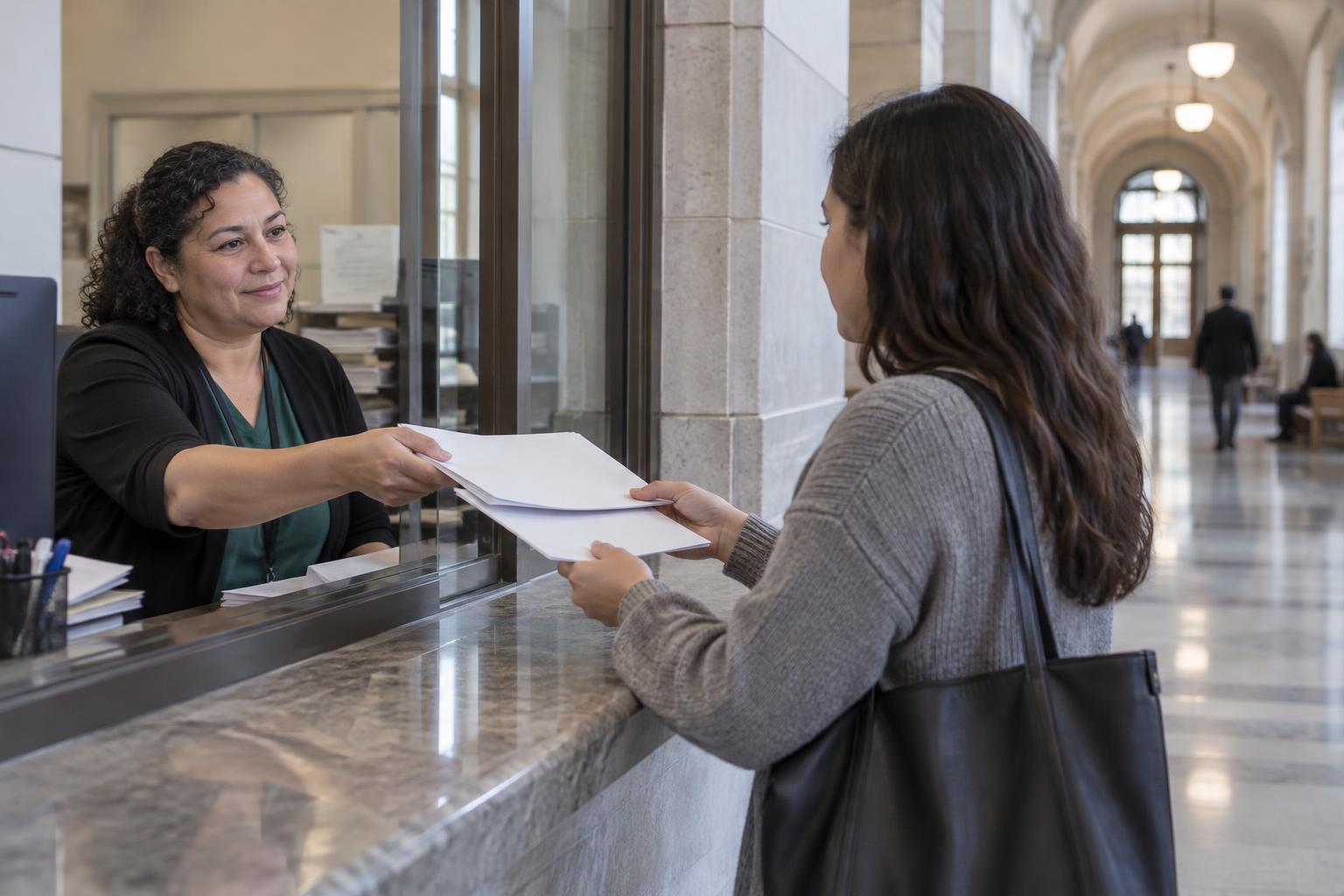
You can usually get free divorce papers from your state court system’s website, your county court’s website, or a court self-help center. Downloading blank forms is generally free, but filing them, serving your spouse, and completing your case may involve costs unless you qualify for waivers or other assistance. The correct packet depends on where you file, whether you have children, and whether you and your spouse agree on the divorce terms.
Divorcesify provides general information, not legal advice. Laws and court procedures vary by state, so speak with a local divorce attorney if you are unsure which forms apply or what rights a proposed agreement would affect.
Where can you get legitimate free divorce papers?
Start with the court system where you plan to file—not a paid document service. Search for your state’s judicial branch website and look for “divorce,” “dissolution of marriage,” “family law forms,” or “self-help.” Divorce is sometimes labeled “dissolution” in official packets.
If you do not know the official website, the USA.gov state courts directory can help you locate your state’s court system. From there, check both statewide resources and the website for the county where you expect to file.
Examples of official starting points include:
- California Courts divorce forms, which organize forms by stages of the case.
- New York Courts divorce forms, including resources for uncontested divorces.
- Texas Judicial Branch forms, where you can review available forms and their stated limits.
These are starting points, not interchangeable packets. A form approved for one state generally will not work in another.
What if your court website is confusing?
Call the clerk’s office or court self-help center and ask:
- “Where can I get the current divorce packet for someone without a lawyer?”
- “Are there different packets for cases with and without minor children?”
- “Does this county require any additional local forms?”
- “Is there a free guided interview or document-preparation clinic?”
Court staff can usually explain procedures and direct you to forms, but they generally cannot advise you what to request. Blank paper copies or printing may carry a charge even when the download is free.
Which divorce packet do you need?
There is no single nationwide set of divorce papers. Before downloading a packet, read its eligibility page and instructions.
Confirm the state and county
You must satisfy applicable residency and filing-location requirements. Living in a state now does not necessarily mean you can file there immediately, and the proper county may depend on where either spouse lives.
Also, a court’s authority to end the marriage is not always the same as its authority to decide custody, support, or property issues. Get advice if spouses or children live in different states or another country.
Match the packet to your situation
Look for distinctions such as:
- With or without minor children: Child-related cases commonly need additional custody, support, and financial forms.
- Starting or responding: A petitioner’s packet is different from the answer or response packet for someone already served.
- Agreed or disputed terms: An uncontested packet may assume agreement on every required issue, not simply agreement to divorce.
- Standard or simplified procedures: Simplified or joint-filing options may have special eligibility limits.
- Opening or finishing the case: Initial filing forms usually are not the complete set needed for a final judgment.
Pregnancy, a child from another relationship, an existing custody order, or disputed legal parentage can affect which forms you need. Ask a local attorney or self-help center rather than deciding those questions from a packet’s title.
If you were served with papers, do not assume downloading your own petition counts as responding. Check your response deadline and the court’s instructions promptly.
What forms are usually included in free divorce papers?
Names and requirements differ, but the following documents commonly appear during a divorce. Not every court requires each one, and some are filed later rather than at the start.
| Document | What it generally does | Important caution |
|---|---|---|
| Petition or complaint | Starts the case and identifies requested relief | Leaving out a request can create problems later, especially in a default case |
| Summons or citation | Gives formal notice of the case and response requirements | It may need to be issued by the clerk before service |
| Case information or cover sheet | Supplies administrative case details | Local versions may be required |
| Confidential information form | Provides protected identifying information | Follow special filing rules rather than placing sensitive data in public documents |
| Financial affidavit or disclosure forms | Reports income, expenses, assets, and debts | Some disclosures are exchanged rather than filed publicly |
| Parenting and support forms | Addresses children’s schedules, support, and related information | Required worksheets and child-residence information vary |
| Proof of service or permitted waiver | Documents legally valid notice or an authorized alternative | Informal delivery may not satisfy service rules |
| Settlement agreement | Records agreed divorce terms | Vague language can make enforcement difficult |
| Proposed judgment or decree | Sets out terms for the judge’s approval | Completing or signing it does not itself finalize the divorce |
A packet labeled “divorce papers” may contain only the opening documents. Download the instructions and checklist too, and identify what you will need at each later stage.
How do you complete free divorce forms correctly?
Read the full instructions before filling in the first page. This helps you avoid signing too early, missing required attachments, or using a form intended for a different type of case.
Gather the information first
Depending on your case, collect:
- Marriage date and location, names, and contact information.
- Information about children and existing custody or support cases.
- Income records, recent tax returns, and employment details.
- Account statements, property records, and debt balances.
- Existing court orders and any written agreements.
Report information accurately and follow disclosure requirements even if your spouse already knows about the property or debt. Do not guess at account values or label property “separate” merely because it is held in your name.
Follow signature and privacy instructions
Some documents require notarization, a sworn declaration, or signatures made in a particular way. Others may need to be signed before court staff. Electronic-signature rules also differ.
Use the court’s confidential forms and redaction rules for Social Security numbers, financial account numbers, and other protected information. Do not assume every divorce filing is private.
If sharing your address could put you at risk, ask about confidential-address procedures before filing. A local legal aid organization or domestic violence advocate may help identify safer options.
Finally, keep a complete copy of everything. Save an editable version if available, but also keep the exact documents you submitted and any court-stamped copies you receive.
What happens after you fill out the papers?
Completing forms is preparation—not the divorce itself. Your court’s instructions should explain the next steps and their order.
1. File the required opening documents
Submit them through an accepted method, which may include filing in person, by mail, or electronically. Electronic filing is not available or mandatory everywhere, and an e-filing portal may have separate rules or charges.
Pay the required filing fee or submit a fee-waiver request as instructed. Check whether the filing was accepted, whether corrections are needed, and whether the clerk issued documents required for service.
2. Give legally valid notice
Your spouse usually must receive formal notice through an authorized process unless a permitted alternative applies. Depending on local rules, service might involve a sheriff, a process server, another eligible adult, or an approved acknowledgment or waiver.
Do not assume you can serve the papers yourself or that emailing them is sufficient. A spouse’s agreement to divorce does not automatically eliminate notice requirements. Follow the instructions for filing proof of service or the permitted alternative.
3. Complete disclosures and resolve the issues
You may need to exchange financial information, submit support calculations, complete a parenting course, or attend hearings. An agreed case still requires legally sufficient terms and the court’s approval.
If your spouse does not respond, a default divorce is not automatic. You generally must request it through the proper procedure and provide required documents and evidence.
4. Complete the finalization process
Your court may require additional filings, a hearing, or a review of your proposed judgment. Mandatory waiting periods may also apply.
Confirm that the judge signed the final judgment, that it was entered, and when it legally takes effect. Filing a petition—or both spouses signing an agreement—does not mean you are divorced.
Do free divorce papers mean a free divorce?
No. “Free divorce papers” usually means free access to blank forms, not a guarantee that the entire case costs nothing.
Possible expenses include filing fees, service costs, copies, certified copies, required classes, and professional help. A private website may also charge for turning your answers into completed documents even though the underlying court forms are free.
If you cannot afford court costs, look for a “fee waiver,” “indigency application,” or “application to proceed without payment of fees.” Eligibility may depend on income, public benefits, expenses, and other circumstances under local rules.
Ask which specific costs a waiver covers. Approval may not eliminate every expense, particularly private service-provider charges, attorney fees, or costs outside the court’s waiver authority. Some systems allow delayed payment rather than permanently waiving payment.
Have the waiver application ready when you file if the court permits or requires that timing. Do not simply skip payment without following the court’s process.
When are free forms not enough, and how can you get help?
Official forms can be useful in straightforward cases, but they do not tell you whether a settlement is fair or whether you are giving up an important right.
Legal review is particularly valuable when there is:
- Disagreement about parenting, support, property, or debt.
- Abuse, intimidation, financial control, or pressure to sign.
- A home, business, pension, stock compensation, or substantial assets.
- Missing financial information or uncertainty about ownership.
- Bankruptcy, immigration, military, or interstate issues.
For example, an agreement awarding you part of a retirement account may require a separate, plan-specific order before the funds can be transferred. The standard divorce packet may not provide it.
If full representation is out of reach, ask about limited-scope legal help: paying a lawyer to review the agreement, explain your rights, or assist with one stage. Court clinics and legal aid organizations may offer free help, subject to eligibility and availability. You can find local civil legal aid through the Legal Services Corporation directory.
Watch for misleading “free” offers
A private preparation service is not necessarily improper, but check what is actually free. Be cautious if a website promises guaranteed court approval, presents itself as the court, requires payment details for a supposedly free download, or hides subscription terms.
Before entering sensitive information, check who operates the site, its privacy policy, the total price, and whether the forms match your court. You do not need to buy a private package simply to obtain available free court forms.
Key takeaways
- Get free divorce papers from official state or local court resources first.
- Choose forms that match your location, children, case type, and stage of proceedings.
- Download the instructions and check for local requirements—not just the petition.
- Free forms do not eliminate filing costs; ask about fee waivers if needed.
- Follow service, disclosure, and finalization rules carefully.
- Have a local divorce attorney review complicated issues or important settlement terms before you sign.
Frequently asked questions
Can I print free divorce papers online?
Yes. Many state and local courts provide printable divorce forms, and some offer fillable PDFs or guided interviews. Use your court’s current packet and download its instructions. Check whether your county requires additional forms and whether you must file on paper or through an electronic filing system.
Are free divorce papers legally valid?
Official court forms can be valid when they are appropriate for your case, completed correctly, and submitted according to court rules. Their being free does not reduce their validity. However, downloading or signing them does not end your marriage; you must complete the required process and obtain a final divorce judgment.
Can I use free divorce papers if we have children?
Often, yes. Courts commonly provide forms for divorces involving minor children, but these cases typically require additional parenting, support, and financial documents. Existing custody orders, interstate issues, or disputed parentage can complicate the process. Confirm that the packet fits your family’s situation and get legal advice about unresolved child-related issues.
Do both spouses have to sign free divorce papers?
Not every document requires both spouses’ signatures. One spouse can generally file a petition without the other’s signature, while a joint petition or settlement agreement may require both. The other spouse ordinarily must receive legally valid notice. If they do not respond, additional default procedures may be necessary before the divorce can proceed.
Can I file for divorce for free if I have no income?
You may qualify for a court fee waiver, but having no income does not automatically resolve every cost. Courts apply their own eligibility rules and may consider benefits, assets, expenses, or other financial circumstances. Submit the required application and ask whether it covers filing, service, and any other mandatory charges.
AI-assisted general information from Divorcesify. This article has not been represented as reviewed by a licensed attorney; confirm current local law before acting.
Find your state’s divorce rules · Explore divorce process guides · Prepare for your attorney consultation
Attorney advertising. Divorcesify is not a law firm, is not a lawyer referral service, and does not provide legal advice. Information on this site is general and may not reflect current law in your state. Using this site or submitting a form does not create an attorney-client relationship. Divorcesify matches visitors with independent, licensed attorneys who pay a fee to participate. We do not endorse or guarantee any attorney, and the choice of a lawyer is an important decision that should not be based solely on advertisements. Read full disclosures.
Get the Divorce Preparation Guide
Checklists, a post-divorce budget outline, and the questions to ask your first attorney — free.
Keep reading
Temporary Orders in Divorce: What They Do and How to Ask
Divorce can take time, but decisions about children, housing, and bills often cannot wait. Temporary orders can establish enforceable rules while your case moves forward.

Who Claims a Child on Taxes After Divorce?
The parent entitled to claim a child for federal tax purposes is not always the parent named in a divorce agreement. Learn how overnight stays, IRS Form 8332, and different tax benefits fit together.

How to File for Divorce in California: Step-by-Step
Filing for divorce in California starts with residency, court forms, and proper service—but those steps do not end the marriage. Follow this practical guide through disclosures, settlement options, and the final judgment.