

Free Divorce Online: What’s Free and How to Get Started
Free online divorce forms are widely available, but a completely free divorce usually requires a court fee waiver and a way to avoid other expenses. Learn how to find legitimate resources and understand what you still need to do.
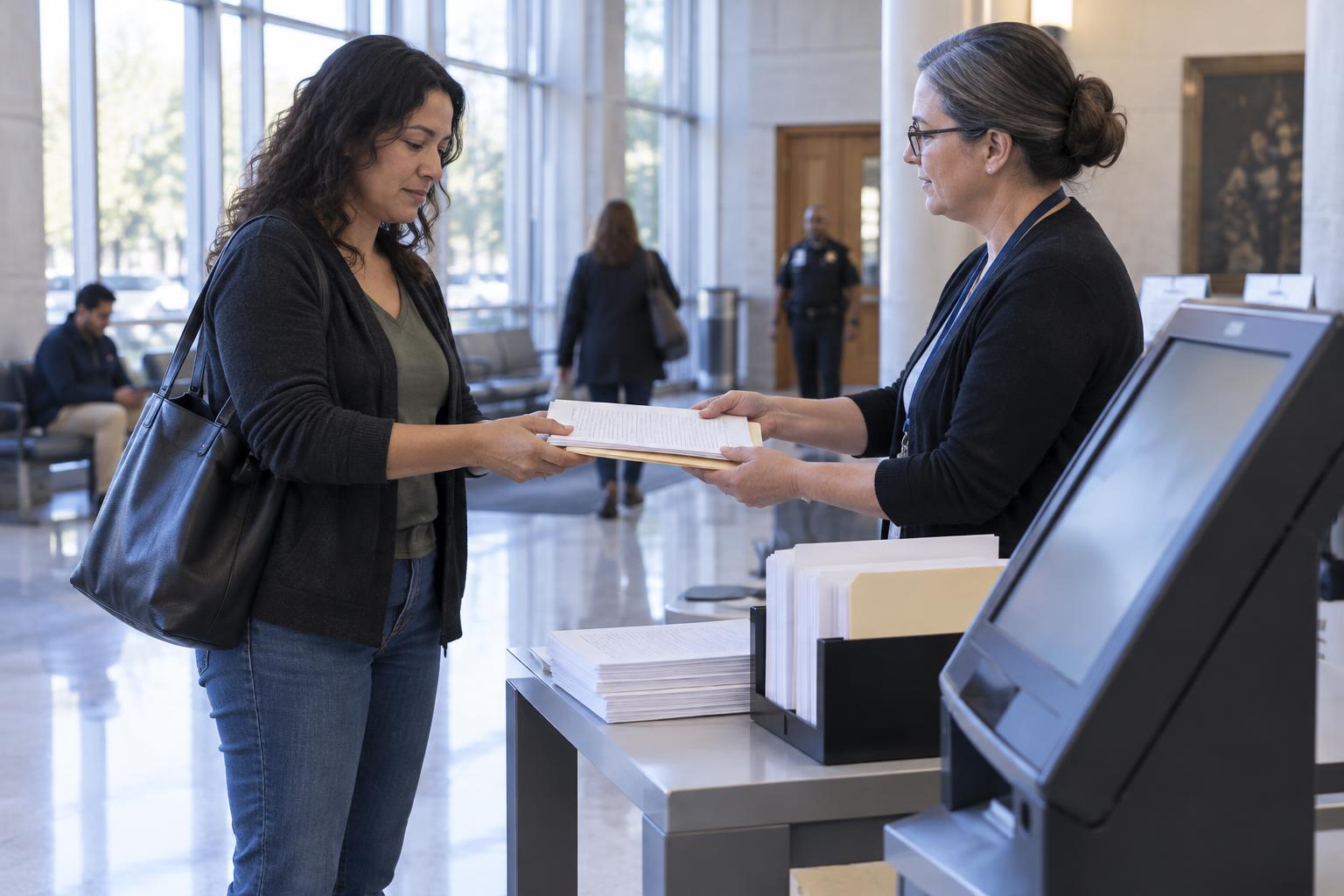
You may be able to start—and sometimes complete—a divorce using free online resources, but “free divorce online” usually means free forms or document-preparation help, not an automatically cost-free divorce. To finish without paying, you generally need court fees waived and a way to cover or avoid other expenses, such as service of papers. Only a court can grant your divorce; downloading forms or completing a website questionnaire does not end your marriage.
What does “free divorce online” actually include?
Three separate things often get bundled together in search results: preparing divorce documents, filing them with the court, and obtaining a final judgment. A website may offer the first for free without providing the other two.
Free forms are not the same as free filing. Courts commonly provide downloadable divorce forms at no charge. Some courts and nonprofit programs also offer guided interviews that turn your answers into completed documents.
You may still face:
- Court filing fees, unless you receive a waiver.
- Charges for legally delivering papers to your spouse.
- E-filing provider or payment-processing fees, depending on the system.
- Notary, copying, certified-copy, translation, or mailing expenses.
- Legal advice or specialized work your situation requires.
A fully online process is a separate question. Your court might accept electronic filing but still require service, additional paperwork, or a hearing. Hearings may be remote or in person.
An inexpensive do-it-yourself divorce is often most practical when both spouses cooperate and understand their financial situation. But agreement alone does not remove filing requirements or guarantee that a judge will approve every proposed term.
Where can you find legitimate free divorce forms?
Start with the court system—not a sponsored result promising an instant divorce. Use your state judiciary’s website to identify the proper county court, then look for its family-law forms and self-help instructions.
The USA.gov state courts directory can help you locate official court websites. Official court domains vary, so verify a resource through the state judiciary rather than relying only on its web address.
| Resource | What may be free | What to check |
|---|---|---|
| State or county court website | Forms, filing instructions, fee-waiver applications | Whether the packet applies to your county and situation |
| Court self-help center | Procedural guidance, workshops, document review where available | Eligibility, appointments, and limits on assistance |
| Legal aid organization | Advice, clinics, or representation for eligible applicants | Income rules, case priorities, and availability |
| Nonprofit document interview | Guided preparation of certain forms | Supported locations, case types, and whether filing is included |
| Commercial divorce website | A questionnaire, sample forms, or an initial assessment | Total price, subscriptions, and what requires payment |
The Legal Services Corporation’s legal aid locator connects people with local organizations. LawHelp.org provides legal-help information, while LawHelp Interactive hosts free document interviews for supported issues and locations.
Before entering personal information, confirm that the resource handles divorce in your jurisdiction, not just separation agreements or general legal documents. Check any revision dates and compare the packet with current court instructions.
Can you use free online forms for your situation?
Free forms are not limited to uncontested cases, but they cannot resolve disagreements or tell you whether a settlement protects you.
A self-help route may be manageable when:
- You meet the filing court’s residency and other requirements.
- You can locate your spouse and arrange lawful service or an authorized alternative.
- You have reliable information about income, assets, and debts.
- You understand the forms and can meet deadlines.
- Any agreement addresses every issue the court needs to decide.
Having children does not automatically prevent you from using free forms. However, you may need additional documents addressing parenting arrangements, child support, and required financial disclosures. The court must apply the relevant legal standards, even if both parents agree.
A spouse’s refusal to cooperate also does not necessarily prevent divorce. It may require contested proceedings or a properly supported default request, rather than a joint or uncontested packet.
When should you get legal advice first?
Seek advice before signing away rights involving a home, retirement benefits, a business, support, or substantial debt. A seemingly simple agreement can create expensive problems later.
Domestic abuse, intimidation, hidden finances, immigration concerns, and uncertainty about which state should handle custody are additional reasons to seek individualized help. Laws vary by state; a local divorce attorney can explain which rights and procedures apply to you.
How do you pursue a free divorce online step by step?
1. Identify the correct court and filing route
Confirm where you can file, which county should receive the case, and whether you are starting a new case or responding to one already filed. If your spouse has served you, do not ignore the response deadline while searching for free resources.
Ask whether self-represented people can e-file and whether you must use a particular portal. Online availability differs by court and case type.
2. Download the complete official packet
Choose the packet matching your circumstances, such as divorce with children or without children. Read the instructions before completing individual forms.
You may need more than a petition: a summons, confidential-information form, financial disclosures, parenting documents, and local cover sheets may also be required. Use the court’s checklist rather than assuming one downloaded document is enough.
3. Prepare your information
Gather basic marriage and address information, existing court orders, income records, account and debt statements, and information about children where applicable.
Use accurate figures and disclose information as required. Do not leave out property because both spouses have informally agreed who will keep it. Follow court rules for redacting sensitive information and submitting confidential forms.
4. Request a fee waiver if you need one
Find the court’s fee-waiver or indigency application. Follow its instructions about supporting documents, signatures, and when to submit it.
If you are e-filing, identify the fee-waiver option before reaching a payment screen. Ask the clerk how to proceed if the system demands payment despite your request.
5. File and confirm acceptance
Submit through the authorized court process. Save your submission receipt, then check whether the clerk accepted the documents or returned them for correction.
An uploaded document is not necessarily an accepted filing. Monitor notices and obtain the filed copies and case number. If a deadline is approaching, ask promptly how rejected submissions affect it.
6. Complete lawful service
E-filing generally does not replace initial service on your spouse. Follow your jurisdiction’s rules about who may serve papers, acceptable delivery methods, and proof of service.
Where permitted, a spouse may sign a formal acknowledgment or waiver of service. That is different from casually agreeing by text to receive the documents. Do not assume you may serve the initial papers yourself.
7. Finish the case and obtain the judgment
Complete remaining disclosures, agreements, proposed orders, required classes, and any hearing or default procedures. A spouse’s failure to respond does not automatically produce a divorce.
Track waiting periods and court instructions. Obtain the signed, entered final judgment and verify when it becomes effective before treating yourself as legally divorced.
Which costs can a divorce fee waiver cover?
A court fee waiver may eliminate certain charges, postpone payment, or provide partial relief, depending on local law and the order. It does not necessarily cover every expense associated with divorce.
Courts commonly consider income, public benefits, necessary expenses, household circumstances, or an inability to pay. The criteria and required proof differ, so apply using your court’s actual rules rather than assuming you earn too much—or automatically qualify.
Ask these questions before planning on a zero-cost case:
- Does the waiver cover the initial filing and later court filings?
- Does it cover service by a sheriff or another authorized public officer?
- Are required classes, certified copies, or other court charges included?
- Are electronic filing charges waived, and how do I claim that waiver?
- Must I report financial changes or potentially repay waived fees later?
Private process servers, lawyers, mediators, and commercial document services are not automatically covered by a court waiver.
For example, receiving free forms and a filing-fee waiver may remove two major expenses. But if you must hire a private process server and that charge is not covered, the divorce is not completely free.
If a waiver is denied, read the notice immediately. There may be a deadline to pay, provide additional information, or request review. Ask about any available installment option; do not assume the case will move forward without action.
How can you avoid misleading “free divorce” offers?
A commercial service is not necessarily illegitimate because it charges money. The problem is an offer that makes the process or price unclear.
Before creating an account or uploading financial records, find out:
- What is actually free? Completing a questionnaire may cost nothing while downloading the finished documents requires payment.
- What is the total price? Look for subscriptions, renewal charges, add-ons, and separate filing or delivery costs.
- What does “filing included” mean? The provider may submit documents but still charge court fees separately.
- What happens if documents are rejected? Read correction and refund terms, including exclusions.
- Who provides advice? Document preparation is not the same as representation by a licensed attorney.
- How is your information handled? Review data-sharing, retention, deletion, and account-security policies.
Treat guarantees of an immediate divorce or universal court approval as warning signs. No private website can bypass state law, service requirements, or judicial review.
Use a private email address and a secure device when possible. If someone monitors your accounts, seek help with safe communications before storing divorce documents online. Browser privacy mode alone does not prevent every form of monitoring.
What if you cannot afford help but your case is complicated?
You do not have to choose only between buying a full-service legal package and handling everything alone.
Contact legal aid and explain both your finances and any urgent circumstances. Assistance depends on eligibility and resources, and not every organization handles every divorce. Court self-help centers can often explain procedures, but staff generally cannot advise you on what settlement to accept.
Other possibilities include:
- Volunteer-lawyer clinics or pro bono referral programs.
- Law school clinics that accept family-law matters.
- Limited-scope representation for a specific task, where available.
- A focused consultation to review an agreement or identify missing issues.
Limited-scope work and consultations are not necessarily free, but they may cost less than full representation. Ask about price and scope before booking.
If abuse or coercion is involved, tell the legal aid intake worker or advocate. They may help you explore safety measures, confidential-address procedures, and appropriate legal referrals. Do not sign an agreement simply to preserve a “free” or uncontested process.
Divorcesify provides general information, not legal representation. A local divorce attorney can help you evaluate risks that a form or automated interview cannot identify.
Key takeaways
- Free divorce online usually means free forms or preparation help—not automatically free filing or a completed divorce.
- Start with official court resources and reputable nonprofit programs.
- Apply for a fee waiver if you cannot afford court fees, and confirm exactly what it covers.
- Check e-filing availability, service rules, deadlines, and final-judgment requirements separately.
- Read commercial offers carefully before paying or sharing sensitive information.
- Seek individualized legal help when safety, children, financial complexity, or pressure to sign makes a do-it-yourself approach risky.
Frequently asked questions
Can I get a divorce online completely free?
Possibly, if you use free resources, qualify for applicable court fee waivers, and have no uncovered expenses. Whether you can complete every step online depends on your court. Service, required classes, certified copies, or other needs may still cost money, so confirm the full process before assuming it will be free.
Are free online divorce papers legally valid?
Free forms can be valid when they are accepted by your court, appropriate for your case, and completed correctly. Official court websites are a reliable starting point. Downloading or signing the forms does not itself grant a divorce; you must follow filing, service, and final-judgment requirements.
Can I file for divorce online for free without my spouse’s agreement?
Your spouse’s disagreement does not necessarily prevent you from filing or receiving a fee waiver. However, it may make an uncontested document service unsuitable. You must follow service rules and resolve disputed issues through the required process. E-filing availability depends on the court, not simply whether both spouses agree.
Do I need a credit card to get free divorce forms?
Official downloadable court forms generally do not require a credit card. A commercial website asking for payment information may be offering a trial, subscription, or paid document package rather than genuinely free forms. Check your court’s website first and read all payment and cancellation terms before providing card details.
How long does a free online divorce take?
Using free online resources does not shorten legal waiting periods or eliminate court processing time. Timing depends on state law, service, cooperation, required disclosures, hearings, and the court’s workload. Errors or missing documents can cause delays. Only the court’s final judgment establishes the divorce, subject to its effective date.
AI-assisted general information from Divorcesify. This article has not been represented as reviewed by a licensed attorney; confirm current local law before acting.
Find your state’s divorce rules · Explore divorce process guides · Prepare for your attorney consultation
Attorney advertising. Divorcesify is not a law firm, is not a lawyer referral service, and does not provide legal advice. Information on this site is general and may not reflect current law in your state. Using this site or submitting a form does not create an attorney-client relationship. Divorcesify matches visitors with independent, licensed attorneys who pay a fee to participate. We do not endorse or guarantee any attorney, and the choice of a lawyer is an important decision that should not be based solely on advertisements. Read full disclosures.
Get the Divorce Preparation Guide
Checklists, a post-divorce budget outline, and the questions to ask your first attorney — free.
Keep reading
Temporary Orders in Divorce: What They Do and How to Ask
Divorce can take time, but decisions about children, housing, and bills often cannot wait. Temporary orders can establish enforceable rules while your case moves forward.

Who Claims a Child on Taxes After Divorce?
The parent entitled to claim a child for federal tax purposes is not always the parent named in a divorce agreement. Learn how overnight stays, IRS Form 8332, and different tax benefits fit together.

How to File for Divorce in California: Step-by-Step
Filing for divorce in California starts with residency, court forms, and proper service—but those steps do not end the marriage. Follow this practical guide through disclosures, settlement options, and the final judgment.