What Happens If a Spouse Dies Before Divorce Is Final?
A spouse’s death usually ends a pending divorce, but it does not automatically settle property, inheritance, or benefit questions. Here is how to identify which rules apply and what to do next.
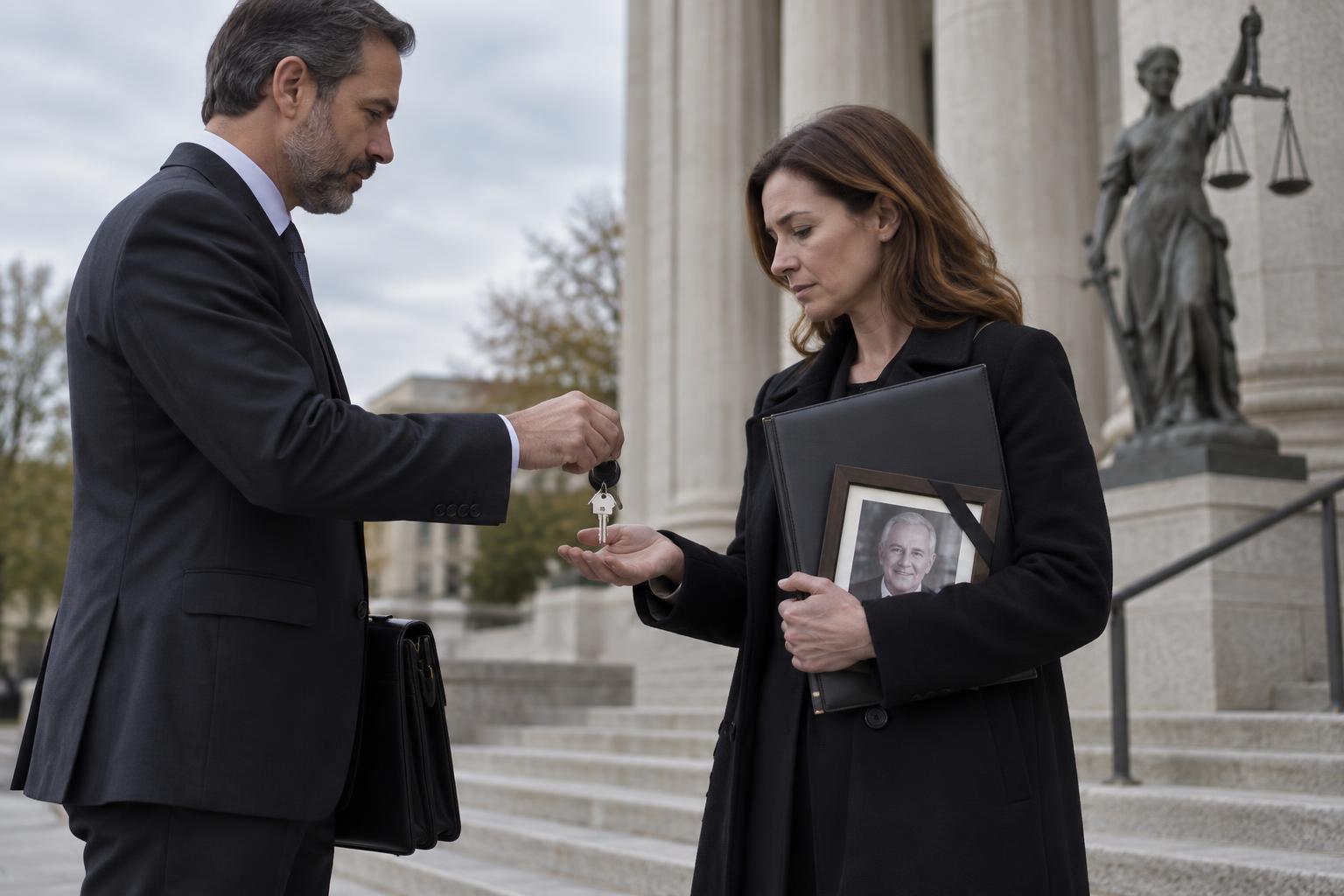
If a spouse dies before the divorce is legally final, the divorce case usually ends, and the surviving spouse generally remains a spouse for inheritance and other legal purposes. Instead of ordinary divorce property division, probate law, ownership documents, beneficiary designations, and sometimes federal benefit rules determine what happens next. Exceptions depend on state law and existing court orders, so contact a local divorce attorney and an estate attorney promptly.
Does the divorce automatically end when a spouse dies?
Usually, yes. Courts often describe this as abatement: death ends the marriage, so there is no longer a marriage for the court to dissolve. But that does not mean every financial issue disappears or every existing order becomes meaningless.
The first question is whether the divorce was actually final when the death occurred. Filing papers, reaching an agreement, or finishing a hearing does not necessarily make a divorce effective.
Check the judgment, not just the timeline
Ask the divorce attorney or court clerk for the docket and any signed, entered judgments. Depending on state law, the critical event may be signing, entry, or another legally required step. A judge announcing a decision in court may not be enough.
Some courts allow a status-only divorce, also called bifurcation, that ends the marriage before property disputes are resolved. If that happened, the person who died might already have been an ex-spouse, even though the case still appeared unfinished.
Unusual cases involving a decision made before death but recorded afterward require legal review. Do not assume a court can simply backdate a divorce.
Financial claims may need separate review
A pending request for divorce-related relief may end, while rights under an existing judgment, enforceable agreement, or separate property claim may remain. Whether the family court can address those issues—or an estate proceeding must handle them—varies by state.
Tell the attorney about the death promptly so they can notify the court and determine what happens to scheduled hearings and deadlines.
What happens to property and debts?
A pending divorce does not usually mean the surviving spouse receives the share they expected to negotiate or win at trial. Once death occurs, ownership and estate rules often replace the divorce framework.
Start by identifying how each asset is owned and whether it has a beneficiary designation.
| Asset or obligation | What usually matters after death |
|---|---|
| Home owned with a valid right of survivorship | The deceased owner’s interest generally passes to the surviving owner outside probate, subject to applicable law and liens |
| Property owned as tenants in common | The deceased spouse’s share generally becomes part of the estate unless another valid arrangement controls |
| Solely owned bank account without a beneficiary | Usually handled through the deceased spouse’s estate |
| Life insurance or retirement account | Beneficiary designations, plan terms, spousal protections, and applicable law |
| Property held in a trust | Trust terms, ownership, and any enforceable spousal rights |
| Joint loan or credit card obligation | The loan agreement and applicable law, not simply who was expected to pay during divorce |
A proposed settlement is not the same as ownership
Suppose spouses expected to sell their home and split the proceeds, but one dies before the divorce is final. If the deed still provides survivorship rights, the home may pass to the surviving owner instead. An enforceable agreement or other legal issue could change that result, so the deed is only the starting point.
Likewise, an unsigned settlement draft generally should not be treated as a binding property division. A signed agreement may matter, but its enforceability and effect after death need review.
Death does not erase secured or joint debts
A mortgage lien generally remains attached to the property. A surviving joint borrower may remain responsible for a loan. Other debts may be payable by the estate, and state law can create additional spousal liability in some circumstances.
Do not pay every bill from your own money simply because a creditor contacts you. First determine whether the obligation belongs to you, the estate, or both.
Can the surviving spouse still inherit?
Often, yes. Being separated or having a divorce pending does not automatically eliminate inheritance rights. The result depends on marital status at death, estate documents, state law, and any valid waiver.
If the deceased spouse had no valid will, intestacy law determines who inherits probate property. A surviving spouse may share with children or other relatives; the spouse does not necessarily receive everything.
If there is a will, its terms matter, but they may not be the last word.
Spousal protections can override parts of an estate plan
Many states protect a surviving spouse against complete disinheritance through an elective share or another statutory entitlement. Community-property ownership, homestead protections, and family allowances may also affect what the survivor receives or can use.
These rights differ substantially by state. Some require a timely filing, and some can be limited by a valid prenuptial, postnuptial, or separation agreement. Certain states also have rules addressing particular forms of separation or marital misconduct.
Do not assume divorce-related revocation rules already apply
Many states revoke certain gifts or appointments to a former spouse after divorce. A pending divorce is not necessarily enough to trigger those rules, and they do not apply uniformly to every asset.
For example, naming a sibling in a new will does not necessarily remove the spouse as beneficiary of an insurance policy. The policy and governing law must be checked separately.
An estate attorney can identify inheritance rights, waivers, and filing deadlines before you accept a distribution, sign a release, or disclaim property.
What happens to insurance, retirement accounts, and survivor benefits?
These assets often pass outside probate, which means the will alone usually does not control them.
Life insurance
The insurer generally starts with the beneficiary designation on file. If the surviving spouse is still the named beneficiary, a pending divorce usually does not by itself remove that designation.
However, court orders, enforceable agreements, competing claims, and applicable law may affect payment. If a beneficiary change appears to violate an order, tell an attorney and notify the insurer promptly. A dispute can be harder to address after funds have been distributed.
Retirement accounts and pensions
Employer retirement plans can have federal spousal protections that override assumptions based on state inheritance law. Some benefits require valid spousal consent before someone else can receive them. Individual retirement accounts follow different rules from many employer plans.
If retirement division was underway, tell the attorney whether a qualified domestic relations order, or QDRO, was drafted, entered, submitted, or accepted by the plan. The timing and wording may affect benefits, especially pension survivor coverage.
Do not assume the absence of a completed QDRO either guarantees or eliminates a claim. Death can make some options unavailable, while others may remain possible under the plan and applicable law.
Social Security survivor benefits
A surviving spouse may qualify for Social Security survivor benefits, depending on factors such as marriage duration, age, disability, or caring for an eligible child. Children may also qualify independently.
If the divorce was already final, different surviving-divorced-spouse rules may apply. Contact the Social Security Administration for an eligibility review rather than relying on the divorce settlement or estate paperwork.
What happens to children, custody, and support?
When one parent dies, the surviving legal parent generally continues as the child’s parent and often assumes sole care. However, existing custody restrictions, findings of unfitness, guardianship proceedings, and other court orders can change the analysis.
A deceased parent’s will naming a guardian does not ordinarily override the rights of a fit surviving legal parent. If a grandparent or another caregiver is already involved, get advice before making abrupt changes that conflict with an existing order.
Support obligations need a separate accounting
Future spousal support commonly ends upon the death of either spouse, but agreements and state law can create exceptions or related estate obligations. Unpaid amounts that accrued before death may remain collectible.
Child support is more complicated. Whether future obligations continue against the deceased parent’s estate depends on state law and the relevant order or agreement. Existing arrears may support an estate claim.
Gather:
- Current custody and support orders.
- Payment records and any arrears calculations.
- Agreements requiring life insurance to secure support.
- Information about benefits available to the child.
Social Security survivor payments may help replace lost income, but do not assume they automatically satisfy every support obligation. Ask how those benefits interact with the order and state law.
What should you do first after the death?
You do not need to resolve everything immediately. Focus first on confirming legal status, preserving records, and protecting deadlines.
- Contact the divorce attorney. Provide the date of death and ask whether a final or status-only judgment was already effective.
- Consult a local estate attorney. Ask who has authority to act for the estate and whether you need separate representation because of competing interests.
- Obtain certified death certificates. Courts, insurers, financial institutions, and benefit administrators may require them.
- Gather key records. Include court orders, settlement documents, deeds, account statements, beneficiary records, insurance policies, and marital agreements.
- Identify urgent deadlines. Estate creditor claims, spousal elections, benefit applications, and challenges to transfers can have different time limits.
- Preserve property without assuming control. Avoid emptying accounts, selling belongings, or transferring titles until your authority and ownership rights are clear.
- Contact benefit providers. Ask about claim requirements, available survivor benefits, and any pending distribution involving a disputed beneficiary.
Do not use the deceased spouse’s passwords or sign documents in their name. A power of attorney generally ends at death; being named as agent does not make you the estate’s personal representative.
Before signing an estate waiver or release, have someone explain exactly which rights you would surrender.
Can you plan for this while a divorce is pending?
Yes, but coordinate changes with your divorce attorney and an estate-planning attorney. A pending divorce may bring automatic restrictions or specific orders limiting transfers, beneficiary changes, and insurance cancellations.
Useful questions include:
- Who currently owns each asset, and does survivorship apply?
- Who is listed as beneficiary on each policy and account?
- Do existing agreements waive inheritance or survivor rights?
- Should a will, trust, health care directive, or power of attorney be updated?
- Are pension survivor protections and support-related insurance addressed?
Some updates may be permitted while others require consent or court approval. Planning is not an invitation to hide or move assets; it is a way to make lawful arrangements and understand what remains unresolved.
Key takeaways
- A spouse’s death usually ends a pending divorce, but surviving financial claims require separate review.
- Confirm whether the marriage had legally ended; an unfinished property case does not always mean the spouses were still married.
- Property titles, estate law, beneficiary designations, and federal benefit rules can produce different outcomes.
- Separation and a pending divorce do not automatically erase inheritance or survivor rights.
- Support arrears, children’s benefits, and estate claims may need prompt attention.
- Laws vary by state. Speak with a local divorce attorney and an estate attorney before transferring assets or giving up rights.
Frequently asked questions
Am I considered a widow or widower if my spouse dies during divorce?
Generally, yes, if you were still legally married when your spouse died. A pending divorce usually does not change that status. However, a status-only divorce may already have ended the marriage even if property issues remained unresolved. Confirm the effective date of any judgment before applying for benefits or completing estate paperwork.
Does a signed divorce settlement still apply after a spouse dies?
It may. A signed settlement can create enforceable rights or waive inheritance rights, but its effect depends on state law, the agreement’s wording, required formalities, and whether court approval was necessary. An unsigned draft is different. Have an attorney review the actual document rather than assuming death either cancels or preserves every provision.
Can a divorce be finalized after one spouse has died?
Usually, the court cannot grant a new divorce after a spouse dies because death has already ended the marriage. Narrow exceptions or procedural rules may apply when a decision occurred before death but was not formally recorded. Courts may also retain authority over certain financial matters. A local attorney should review the docket and timeline.
Will I receive life insurance if we were getting divorced?
You may receive the proceeds if you remain the valid beneficiary, but a pending divorce alone does not answer the question. The policy, beneficiary records, court orders, agreements, and governing law all matter. Contact the insurer to confirm claim requirements, and get legal advice promptly if someone disputes the designation or a recent change.
Do I have to pay my deceased spouse’s debts?
Not automatically. The estate generally handles debts owed solely by the deceased person, but joint borrowers and some surviving spouses may have personal liability under applicable law. Secured debts can still affect property you inherit. Before paying from personal funds or signing a repayment agreement, ask an estate attorney to identify your actual obligations.
Attorney advertising. Divorcesify is not a law firm, is not a lawyer referral service, and does not provide legal advice. Information on this site is general and may not reflect current law in your state. Using this site or submitting a form does not create an attorney-client relationship. Divorcesify matches visitors with independent, licensed attorneys who pay a fee to participate. We do not endorse or guarantee any attorney, and the choice of a lawyer is an important decision that should not be based solely on advertisements. Read full disclosures.
Get the Divorce Preparation Guide
Checklists, a post-divorce budget outline, and the questions to ask your first attorney — free.
Keep reading
Temporary Orders in Divorce: What They Do and How to Ask
Divorce can take time, but decisions about children, housing, and bills often cannot wait. Temporary orders can establish enforceable rules while your case moves forward.
Who Claims a Child on Taxes After Divorce?
The parent entitled to claim a child for federal tax purposes is not always the parent named in a divorce agreement. Learn how overnight stays, IRS Form 8332, and different tax benefits fit together.
How to File for Divorce in California: Step-by-Step
Filing for divorce in California starts with residency, court forms, and proper service—but those steps do not end the marriage. Follow this practical guide through disclosures, settlement options, and the final judgment.