How Does Military Deployment Affect Child Custody?
Military deployment may require temporary changes to parenting arrangements, but it should not automatically cost a parent custody. Learn how federal protections, state laws, and deployment-specific court orders work together.
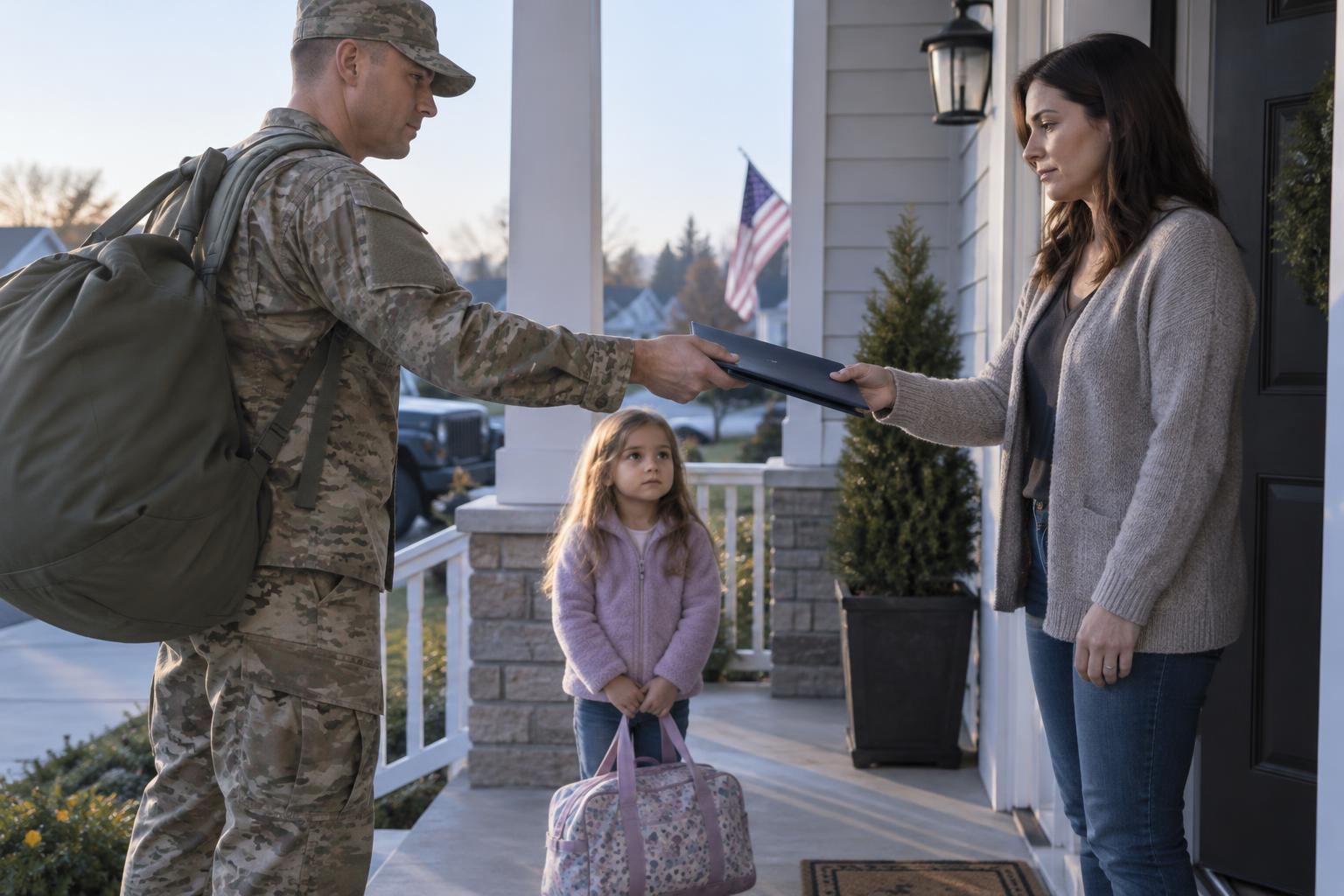
Military deployment can require temporary changes to where a child lives and how parents share decisions, but deployment alone cannot be the sole reason for a permanent custody change under federal law. Eligible servicemembers may also request a pause in custody proceedings when military duties materially affect their ability to participate. State laws and your existing custody order determine many details, so arrange a deployment-specific parenting plan with help from a local divorce or custody attorney.
What custody protections apply to deployed military parents?
Two federal protections are especially important: limits on deployment-based custody changes and procedural protections under the Servicemembers Civil Relief Act, or SCRA. Neither means a court must ignore a child's safety or day-to-day needs.
Deployment alone cannot justify a permanent custody change
Under 50 U.S.C. § 3938, a court cannot use a servicemember's absence because of deployment, or the possibility of deployment, as the sole factor supporting a permanent custody modification.
That distinction matters. A court can still consider other relevant evidence, such as abuse, neglect, or circumstances affecting the child's welfare. The protection is not a guarantee that every custody arrangement will remain unchanged.
The same federal provision limits the duration of a temporary custody order based solely on deployment: it must expire no later than the period justified by that deployment. State laws may provide additional protections.
The SCRA may allow a pause in proceedings
Under 50 U.S.C. § 3932, qualifying servicemembers who have notice of a civil proceeding can obtain an initial stay of at least 90 days when the statutory requirements are met.
The application generally needs:
- A statement explaining how current military duties materially affect the ability to appear, along with a date when the servicemember will be available.
- A communication from the commanding officer stating that military duties prevent appearance and that military leave is not currently authorized.
A deployment notice alone is not necessarily enough. Additional stays require further consideration, and a stay does not automatically resolve where a child should live while the parent is away. Courts must address applicable federal protections alongside any urgent safety issues.
Does an existing custody order change automatically?
Usually, deployment does not rewrite your custody order by itself. The order remains the starting point, even if its regular parenting schedule becomes impractical.
For example, a parent who normally has alternating weeks may be unable to exercise in-person parenting time during an overseas deployment. That practical problem does not automatically give either parent authority to choose a permanent replacement arrangement.
Review the order for provisions covering:
- Military deployment, extended travel, or long absences.
- Notice requirements and deadlines.
- A right of first refusal for childcare.
- Travel restrictions and permission to leave the state or country.
- Decision-making authority and emergency medical care.
A right-of-first-refusal provision may require offering the other parent care before using a third party, but its wording matters. A clause written for occasional babysitting may not clearly address a months-long deployment.
Even when both parents agree, informal texts may not provide the same protection as a court-approved temporary order. Ask whether your agreement must be filed and approved to modify the existing order effectively.
Label the arrangement as temporary and deployment-related. Explain what changes, what stays the same, and how the regular arrangement will resume.
Is a military family care plan the same as a custody order?
No. A military family care plan addresses caregiving arrangements required by the service branch. A custody order establishes enforceable rights and responsibilities under applicable family law. The documents should work together, but they serve different purposes.
| Document | Main purpose | Important limitation |
|---|---|---|
| Military family care plan | Identifies caregivers and practical arrangements during military absences | Does not override a court's custody order or the other parent's legal rights |
| Temporary custody order | Establishes deployment-period parenting arrangements | Must comply with applicable federal and state law |
| Caregiver power of attorney | Authorizes specified actions, such as certain school or medical tasks | Does not necessarily transfer custody or override another parent's authority |
A family care plan naming a grandparent does not automatically entitle that grandparent to keep the child instead of the other legal parent. If the proposed placement conflicts with the custody order, resolve that conflict through the appropriate legal process before departure whenever possible.
Some states permit a deploying parent to request that a relative or another trusted adult exercise certain contact or caretaking rights during deployment. Eligibility, the scope of those rights, and required findings vary. This is not a nationwide right to assign parenting time to anyone you choose.
If you believe the other parent is unsafe, raise specific evidence with an attorney. Do not rely on a family care plan as a substitute for a protective custody order.
What should a deployment parenting plan include?
A useful deployment plan answers ordinary questions before they become urgent disputes. It should be realistic about military obligations and stable enough for the child to understand.
Living arrangements and decision-making
Identify where the child will live, who handles school transportation, and who can access medical and educational records. Address who makes urgent decisions if the deployed parent cannot be reached.
Distinguish temporary physical care from legal decision-making authority. A child staying with one parent during deployment does not necessarily mean that parent receives sole authority over education, healthcare, or other major decisions.
Communication that accounts for military realities
Set reasonable expectations for calls, video chats, messages, and letters. Account for time zones, the child's schedule, connectivity problems, and periods when communication is unavailable.
Avoid promises of a daily call if the assignment cannot support them. Instead, consider a reasonable contact window when communication is available, with alternatives such as recorded messages or email.
The plan should not require disclosure of classified information, sensitive locations, or operational details.
Leave, travel, and costs
Explain how parenting time during authorized leave will be requested and arranged. Specify notice expectations, transportation responsibilities, travel consent, and how costs will be handled.
Consider the child's school schedule and comfort with travel. Leave can be an important opportunity for contact, but it should not create an unworkable or unsafe itinerary.
An end point and return process
State what triggers the temporary arrangement's end, what notice the returning parent must provide, and whether a transition period is appropriate. Include a procedure for extensions, early returns, or changed orders.
For example, the plan might require prompt notice of a confirmed return and set out steps for resuming the regular schedule. Have a local attorney review the language so it matches state law and any necessary court procedure.
What if the parents disagree before deployment?
Act promptly once you know deployment may affect parenting time. State law may impose particular notice obligations or offer expedited procedures, but those rules are not uniform.
Start with a specific written proposal focused on the child rather than either parent's perceived entitlement. Include dates if known, proposed living arrangements, communication options, and a return plan.
If agreement is not possible, ask an attorney about requesting a temporary deployment order. Depending on the jurisdiction and circumstances, options may include an expedited hearing, remote testimony, or other accommodations. None should be assumed available without checking local rules.
Do not overlook court deadlines
A servicemember who receives custody papers should not assume military status automatically pauses the case. Promptly seek advice about responding and requesting SCRA protections.
Likewise, the nondeploying parent should not treat deployment as a shortcut to permanent custody. A proposal that solves the temporary caregiving problem is different from an attempt to eliminate the deployed parent's long-term role.
Address genuine safety concerns separately
If there is immediate danger, contact emergency services when safe and ask about emergency custody procedures. Federal military protections do not erase evidence of abuse or make unsafe care arrangements acceptable.
Mediation may help with ordinary scheduling disagreements, but it may be inappropriate where coercion or domestic violence prevents safe participation. Tell your attorney about those concerns early.
What happens to custody when the deployed parent returns?
The answer depends on the temporary order and applicable law. Returning from deployment does not always mean the parent should immediately pick up the child without notice or further steps.
Read the order's termination and reinstatement provisions carefully. Some arrangements include a defined return process; others may require a filing, hearing, or additional court action. Federal limits on deployment-only temporary orders remain important, but families still need clarity about implementation.
A returning parent should:
- Give the notice required by the order.
- Confirm the expected location and date of return when permitted.
- Arrange exchanges and any agreed transition period.
- Document requests to resume the regular schedule.
- Seek court help if the other parent refuses to follow the applicable order.
A short, structured transition can help a child reconnect after a lengthy absence. It should not become an indefinite barrier to restoring parenting time.
If a parent believes new circumstances justify a permanent change, that request must satisfy the applicable legal standard. Deployment alone cannot be the sole basis for a permanent modification.
What should military parents do before departure?
Gather the information needed to align your military obligations with your court-ordered responsibilities. Keep accessible copies of:
- The current custody order and any protective orders.
- Deployment documentation that can lawfully be shared.
- The family care plan and caregiver authorizations.
- The proposed temporary parenting arrangement.
- School, healthcare, and emergency contact information.
- Written agreements and relevant communications between parents.
Ask your installation's legal assistance office what help it provides. Military legal assistance attorneys may offer advice and document review, but they generally do not represent servicemembers in civilian family court. A local divorce or custody attorney can assess court procedures, state deployment protections, and potential conflicts between documents.
Two additional issues deserve attention. First, deployment does not automatically change child support; request an appropriate review if the changed circumstances warrant one. Second, deployment or a temporary relocation does not automatically transfer custody jurisdiction to a different state. Interstate and international situations require careful analysis before filing elsewhere or moving the child.
You do not have to predict every detail of military service. The goal is a workable legal framework that protects your child and both parents' rights when circumstances change.
Key takeaways
- Deployment may require temporary parenting changes, but it cannot be the sole reason for a permanent custody modification.
- SCRA court-delay protections require timely action and supporting information; they are not automatic.
- A military family care plan does not override a custody order or the other parent's rights.
- A deployment order should address care, decisions, communication, travel, and the return process.
- Laws vary by state. Consult a local divorce or custody attorney before departure whenever possible.
Frequently asked questions
Can a military parent lose custody because of deployment?
Deployment cannot be the sole factor supporting a permanent custody change under federal law. A court may still make temporary arrangements and consider other evidence relevant to the child's welfare. The outcome depends on the existing order, applicable state law, and circumstances beyond deployment, including any substantiated safety concerns.
Can my child stay with grandparents while I am deployed?
Possibly, but naming grandparents in a family care plan does not override the other parent's rights or an existing custody order. Some states allow court-approved delegation of certain caretaking or contact rights during deployment. Get legal advice and any necessary court approval before placing the child with a grandparent.
Does the SCRA automatically stop a custody case?
No. Military status alone does not automatically pause a custody case. A qualifying servicemember generally must request a stay and provide information showing how military duties materially affect participation, along with the required commanding officer communication. An initial stay of at least 90 days is available when the statutory requirements are met.
Do I get my regular parenting schedule back immediately after deployment?
Check the temporary order's return provisions and state law. The arrangement may include notice requirements, a transition period, or a court procedure for reinstatement. Federal law limits temporary orders based solely on deployment, but do not assume an unannounced pickup is appropriate. Seek enforcement help if the other parent refuses to comply.
Can a deployed parent still share legal custody?
Yes, deployment does not necessarily end shared legal decision-making. Parents can arrange remote participation in major decisions while authorizing the available parent to handle emergencies or time-sensitive matters. The order should explain what happens when communication is unavailable. Any changes must follow applicable law and protect the child's needs.
Attorney advertising. Divorcesify is not a law firm, is not a lawyer referral service, and does not provide legal advice. Information on this site is general and may not reflect current law in your state. Using this site or submitting a form does not create an attorney-client relationship. Divorcesify matches visitors with independent, licensed attorneys who pay a fee to participate. We do not endorse or guarantee any attorney, and the choice of a lawyer is an important decision that should not be based solely on advertisements. Read full disclosures.
Get the Divorce Preparation Guide
Checklists, a post-divorce budget outline, and the questions to ask your first attorney — free.
Keep reading
Temporary Orders in Divorce: What They Do and How to Ask
Divorce can take time, but decisions about children, housing, and bills often cannot wait. Temporary orders can establish enforceable rules while your case moves forward.
Who Claims a Child on Taxes After Divorce?
The parent entitled to claim a child for federal tax purposes is not always the parent named in a divorce agreement. Learn how overnight stays, IRS Form 8332, and different tax benefits fit together.
How to File for Divorce in California: Step-by-Step
Filing for divorce in California starts with residency, court forms, and proper service—but those steps do not end the marriage. Follow this practical guide through disclosures, settlement options, and the final judgment.